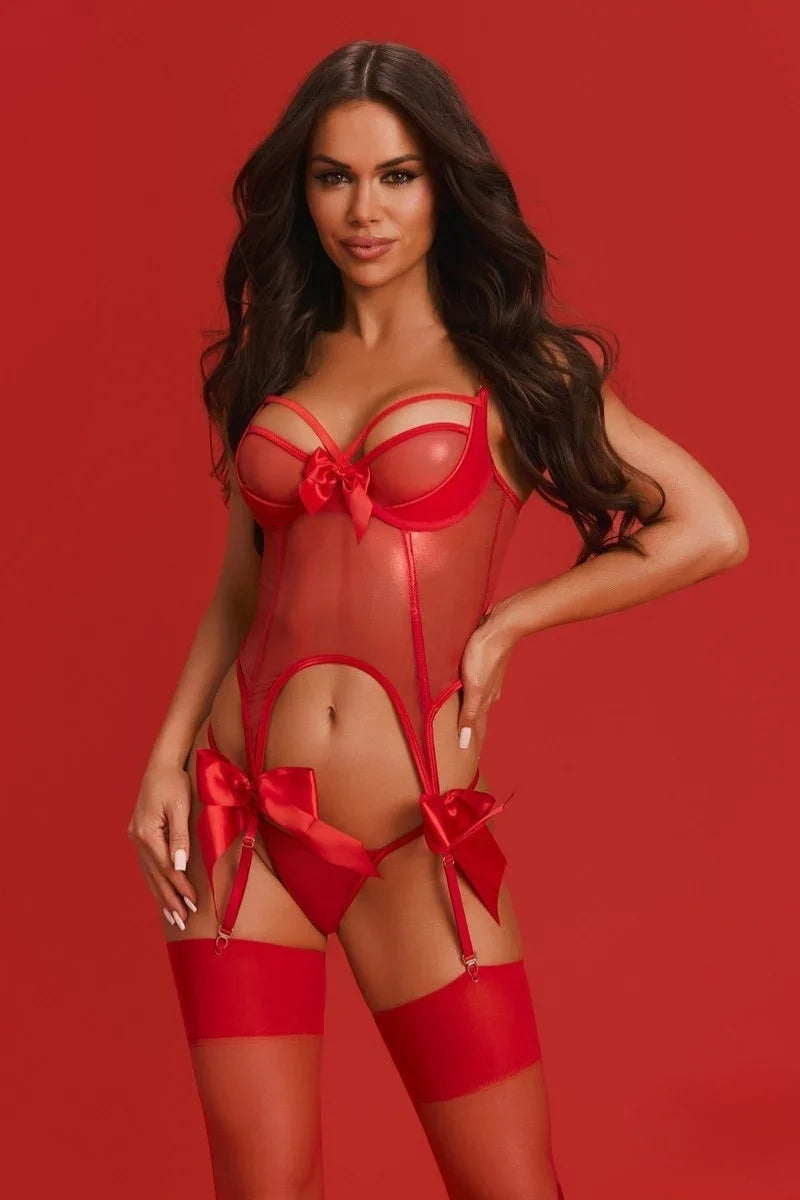
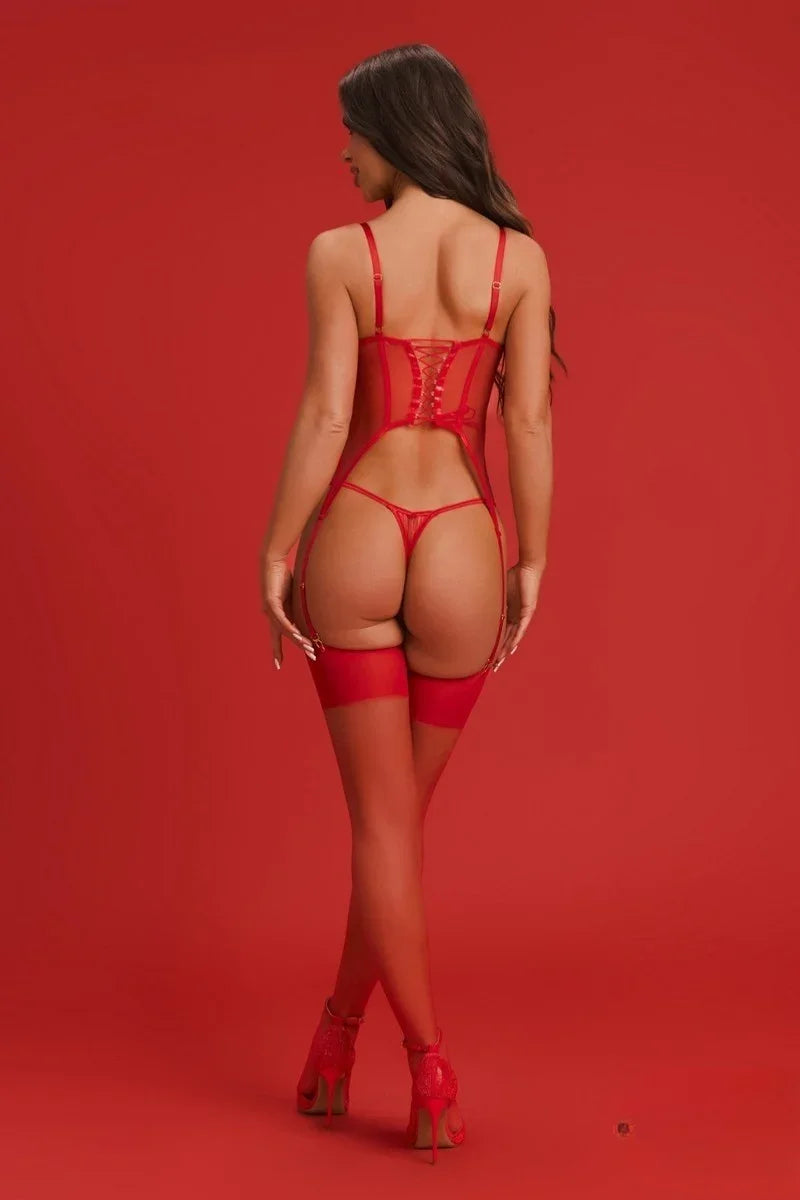
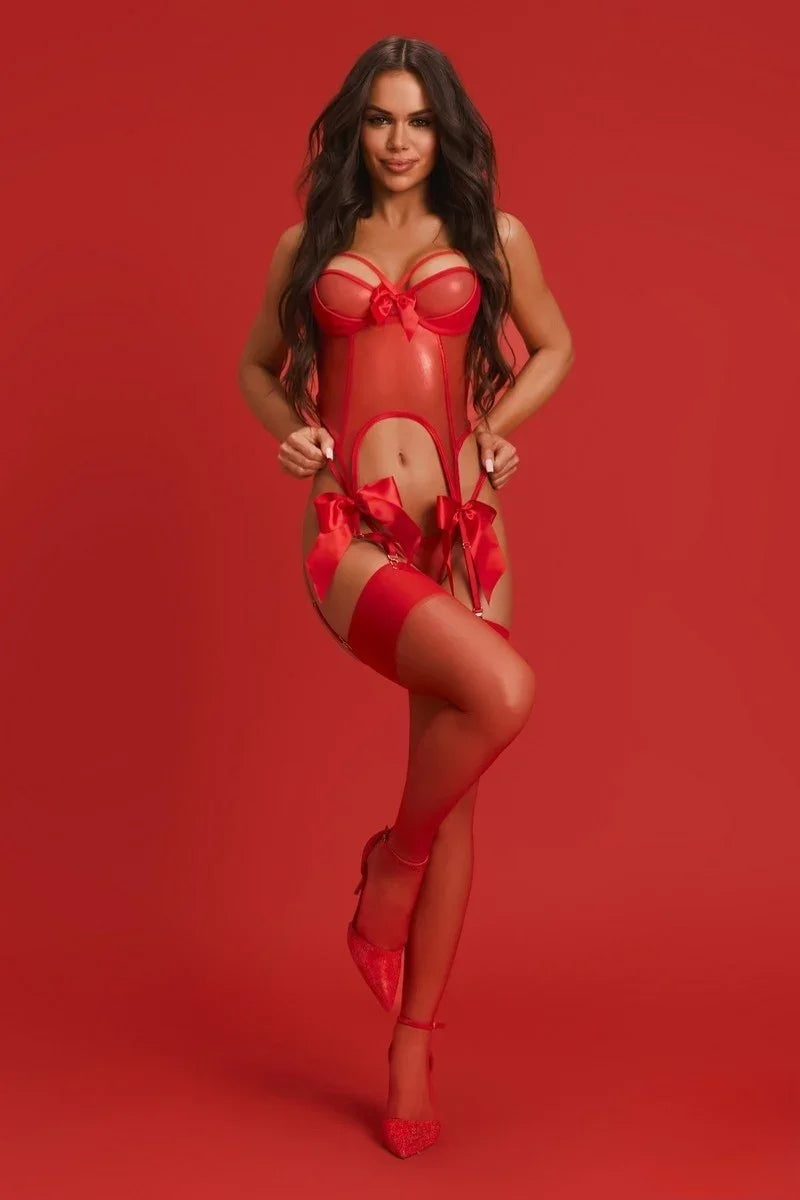
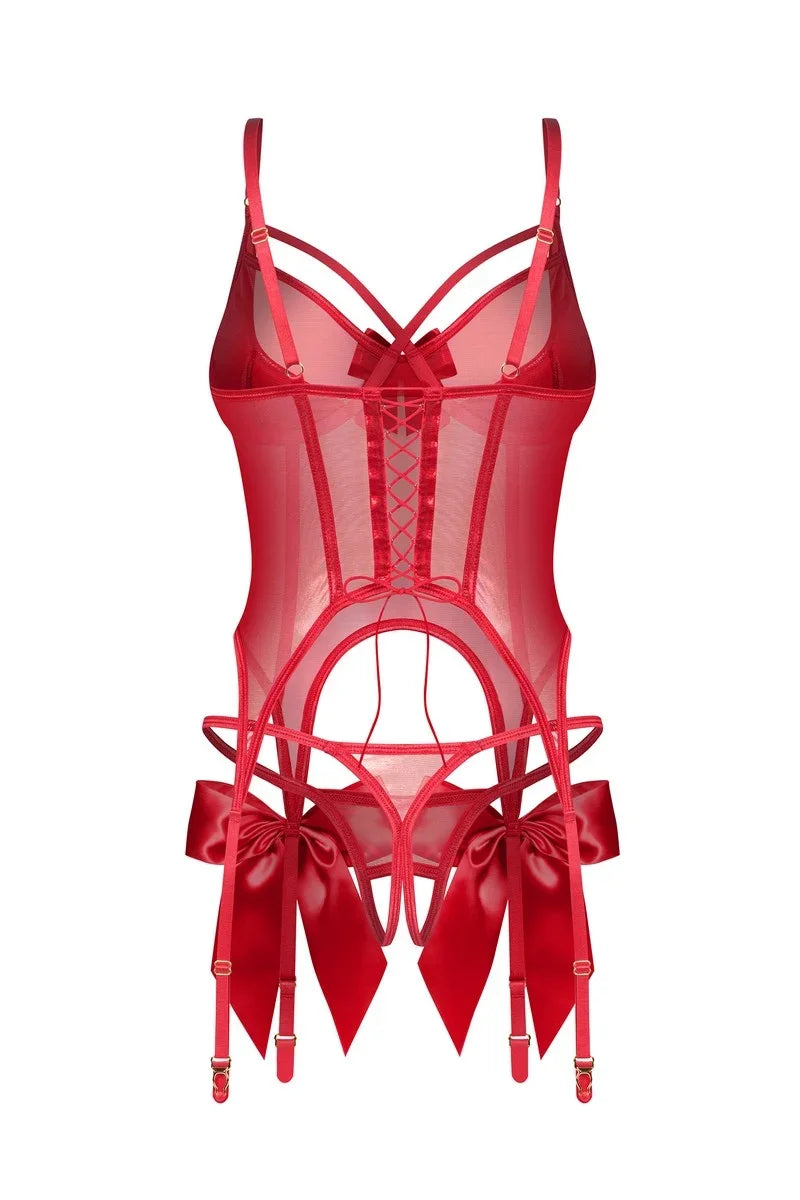
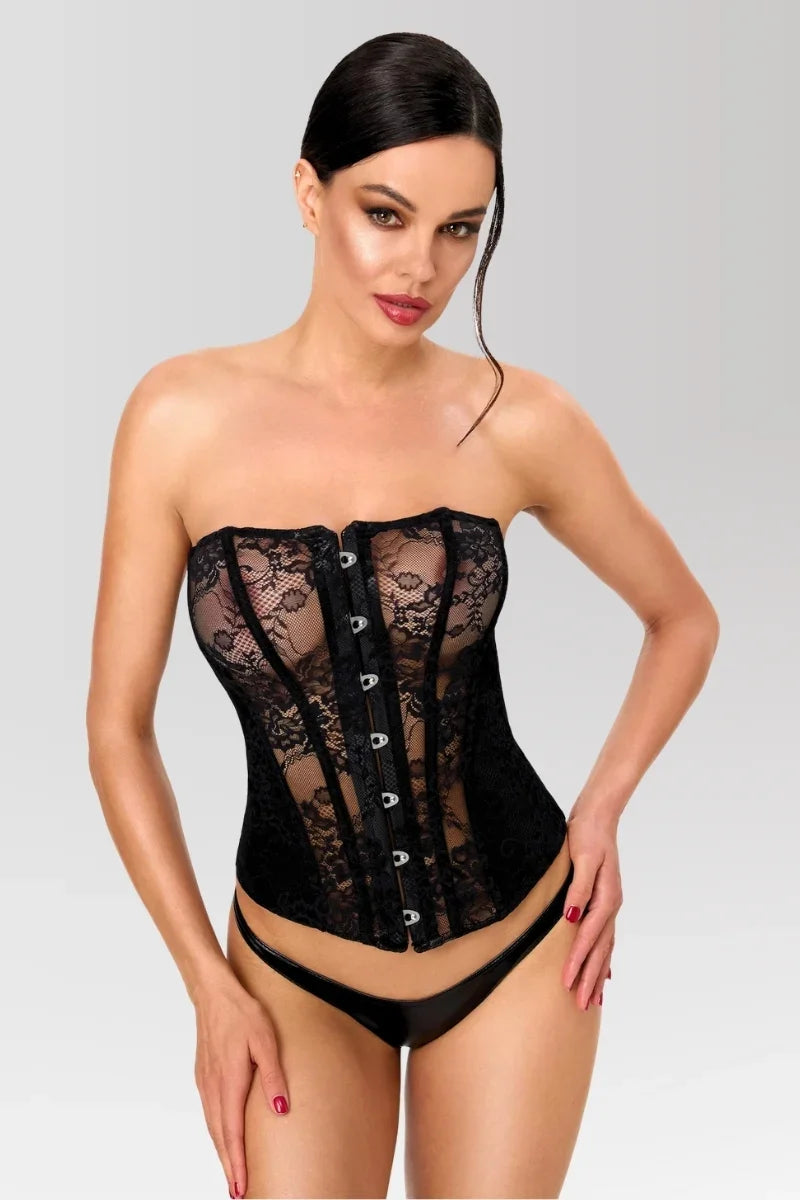
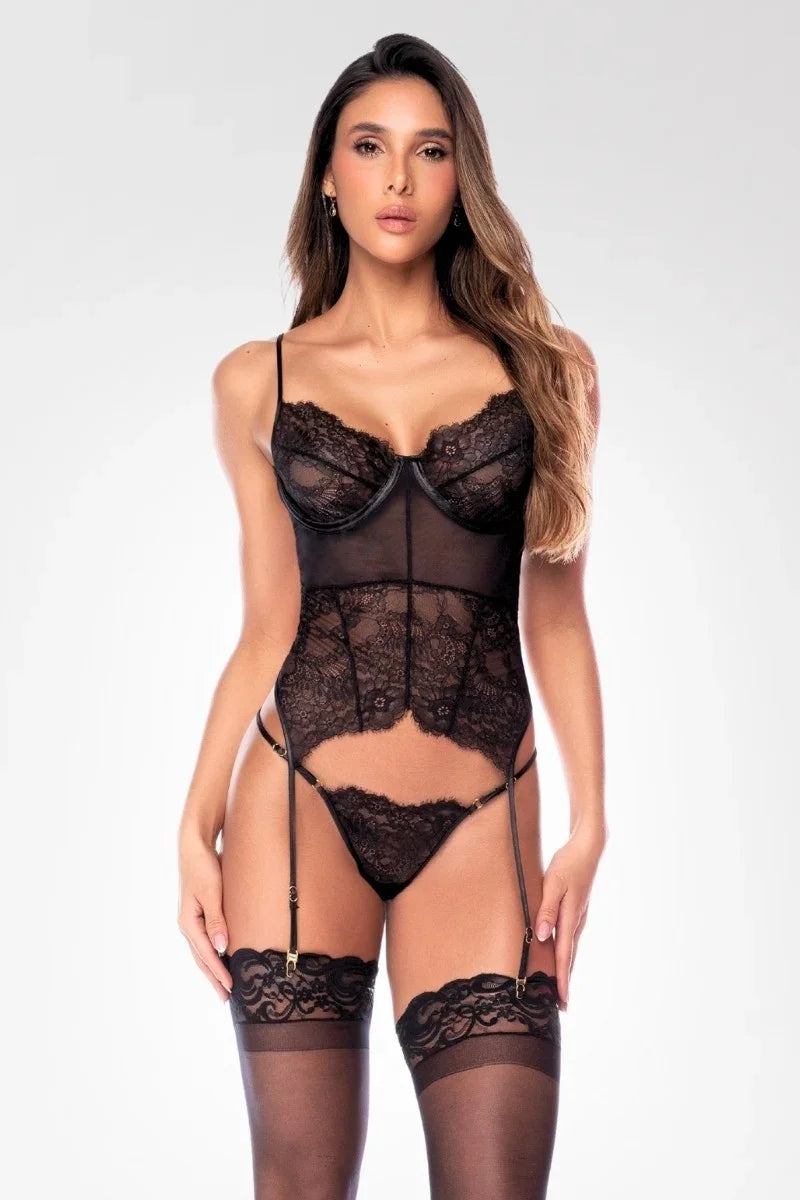
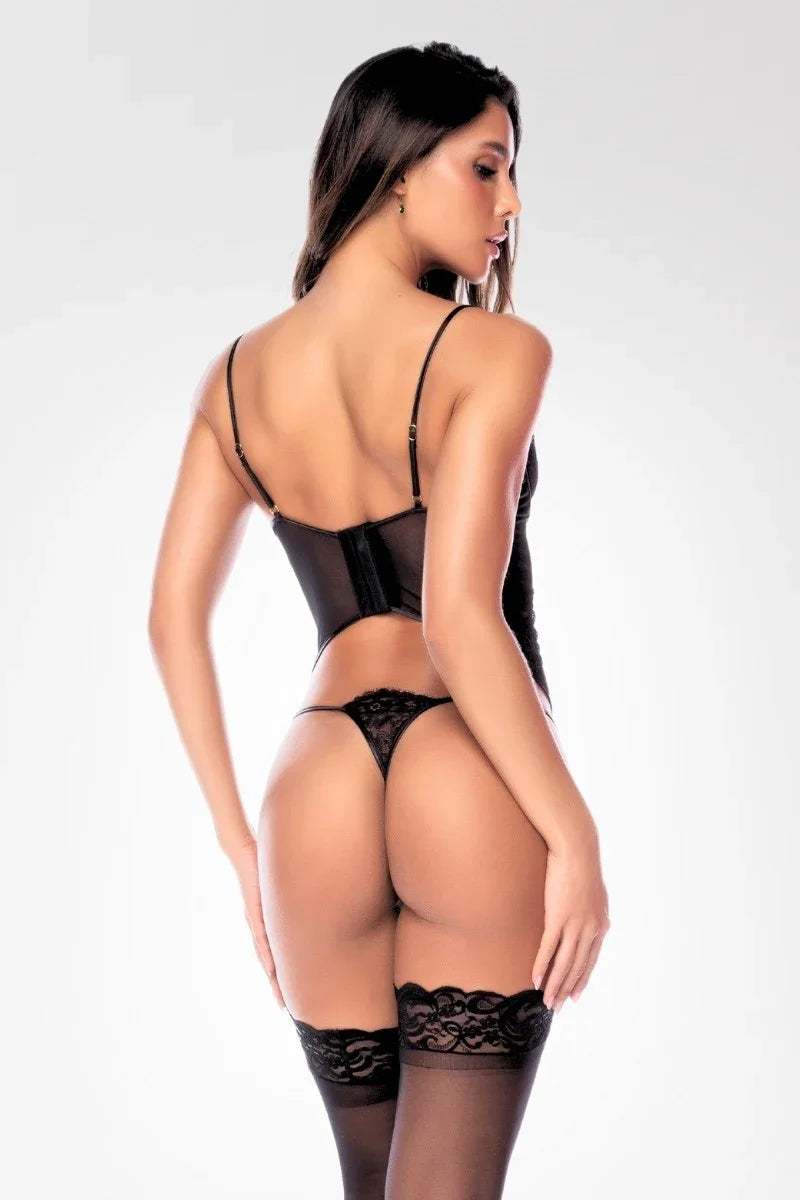
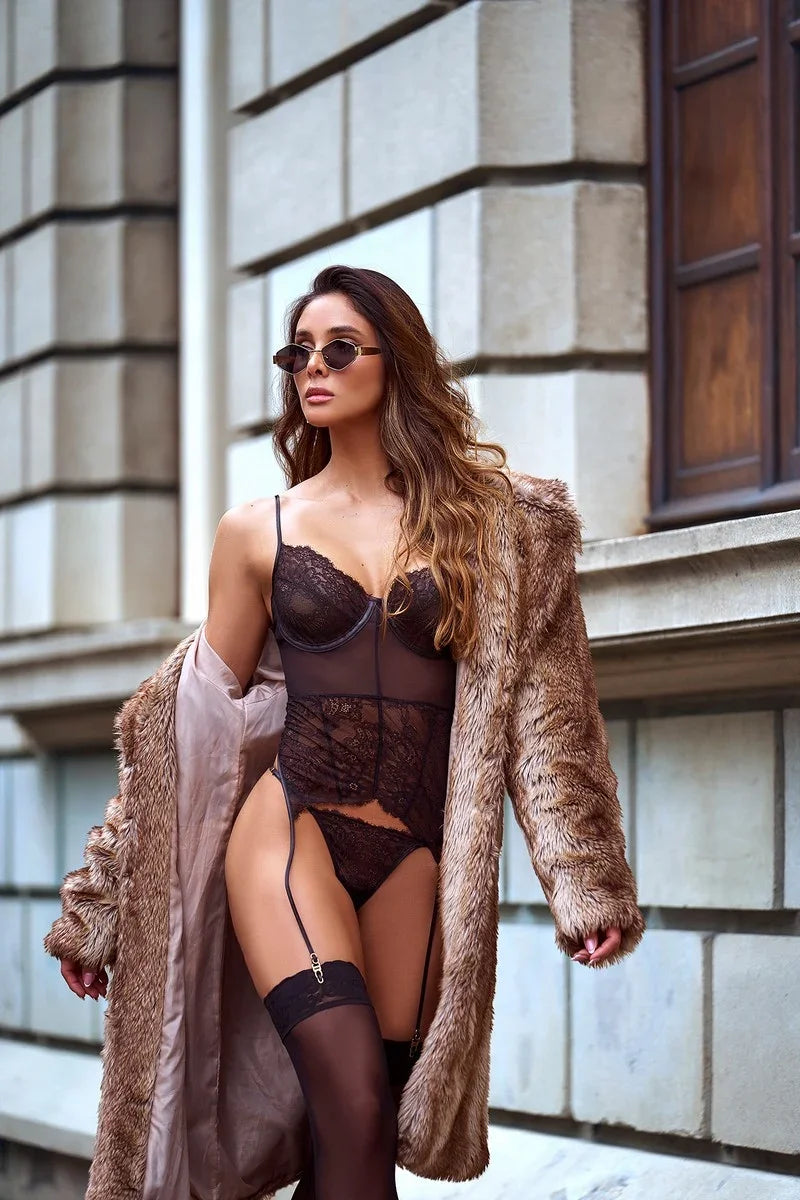
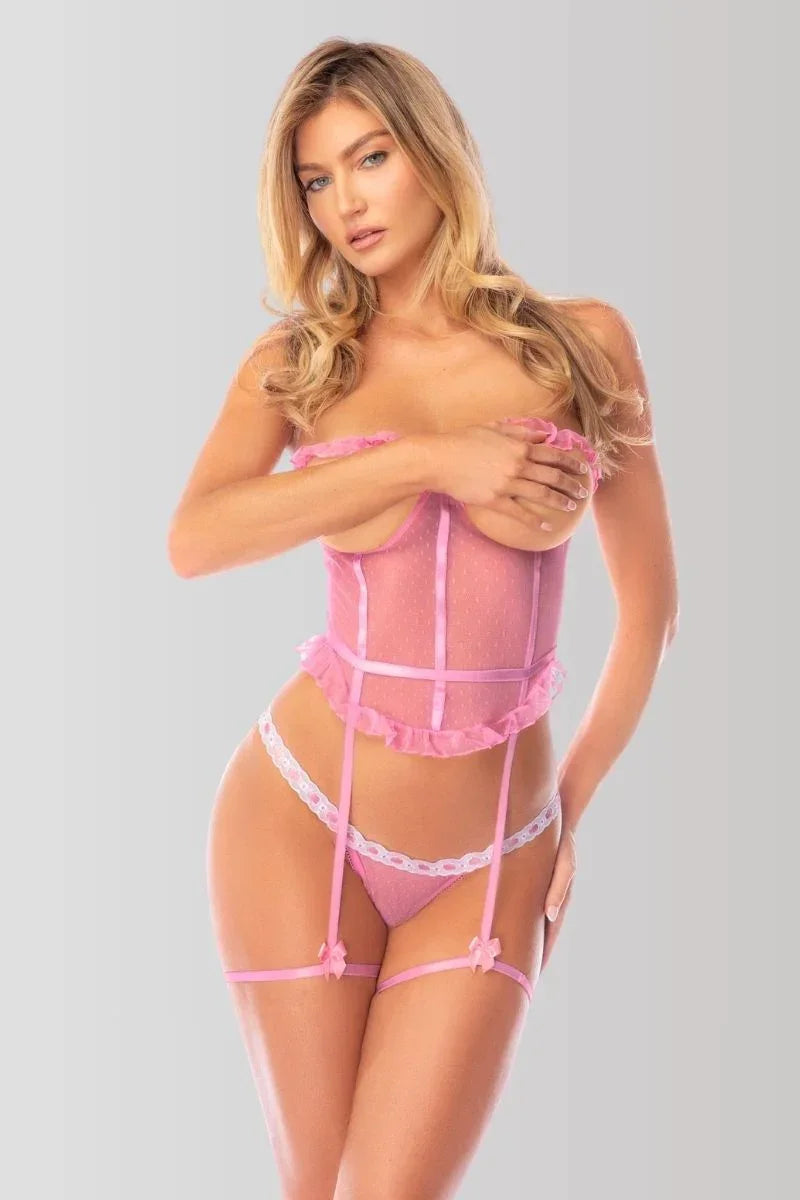
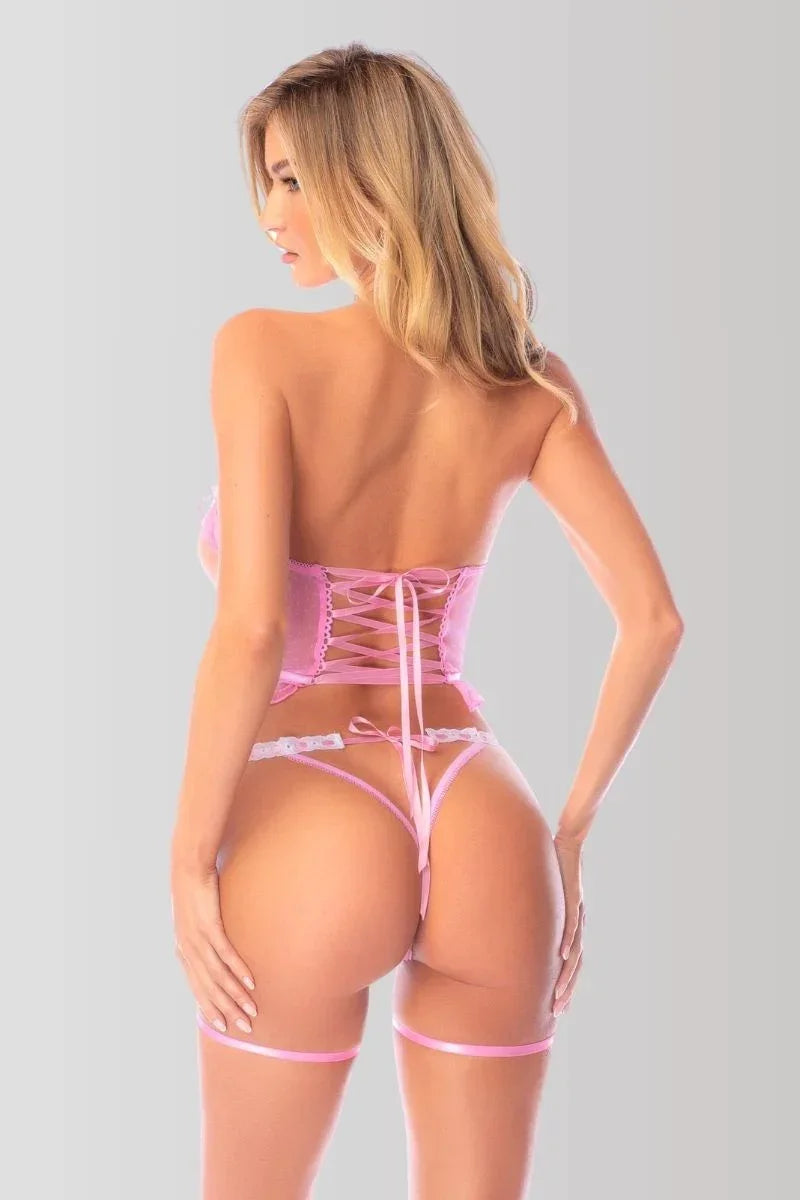
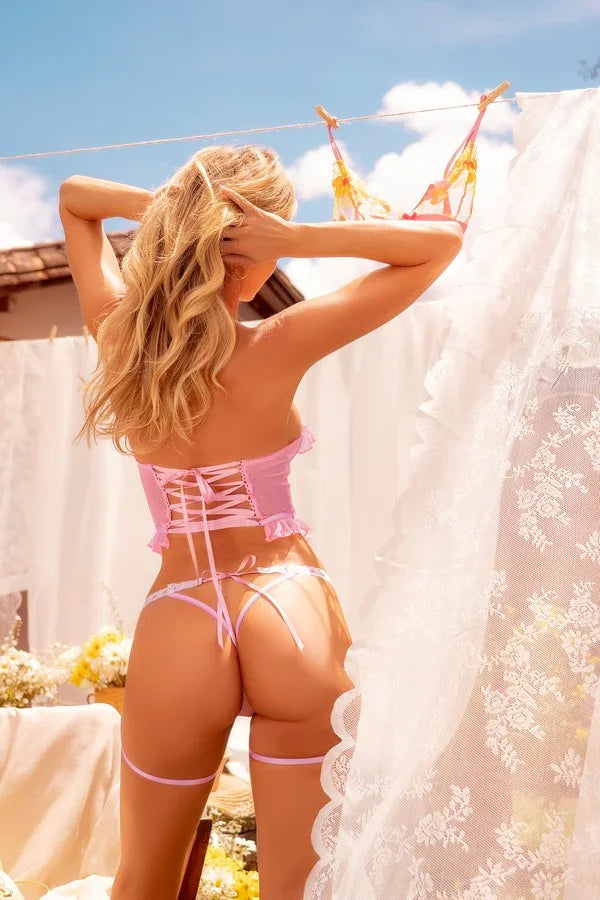
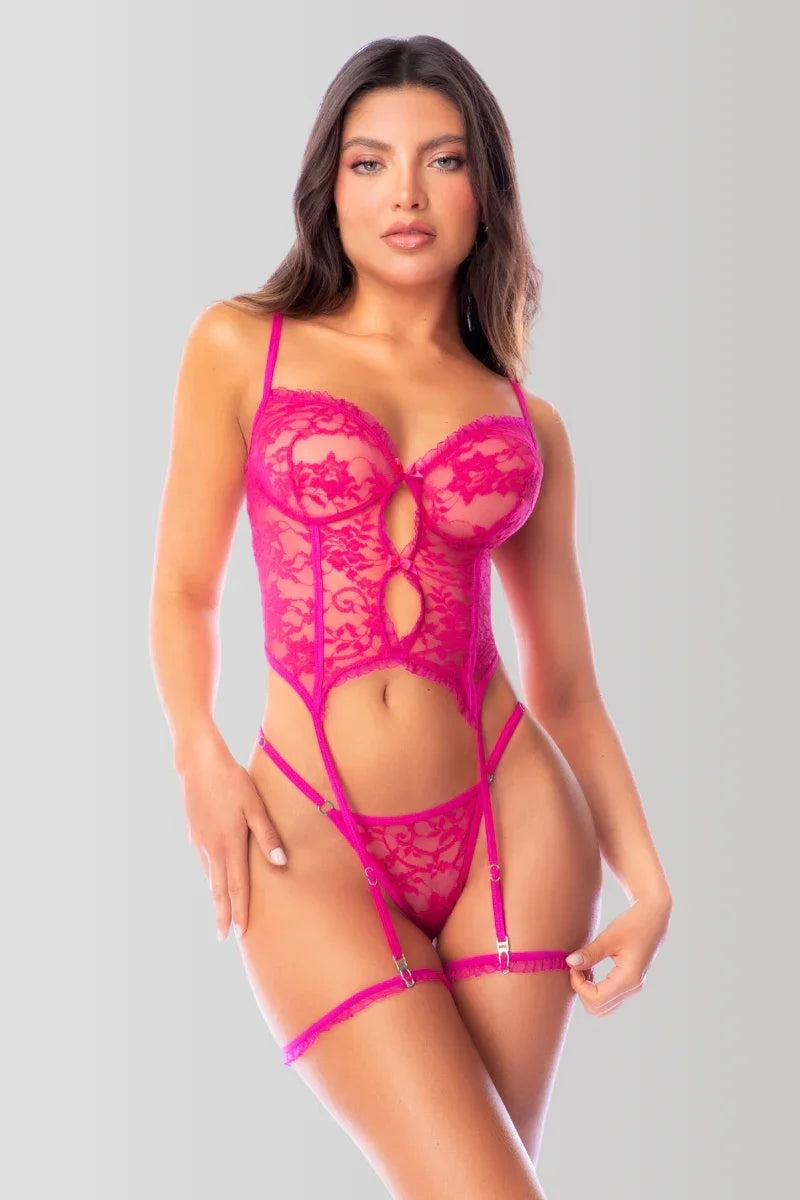
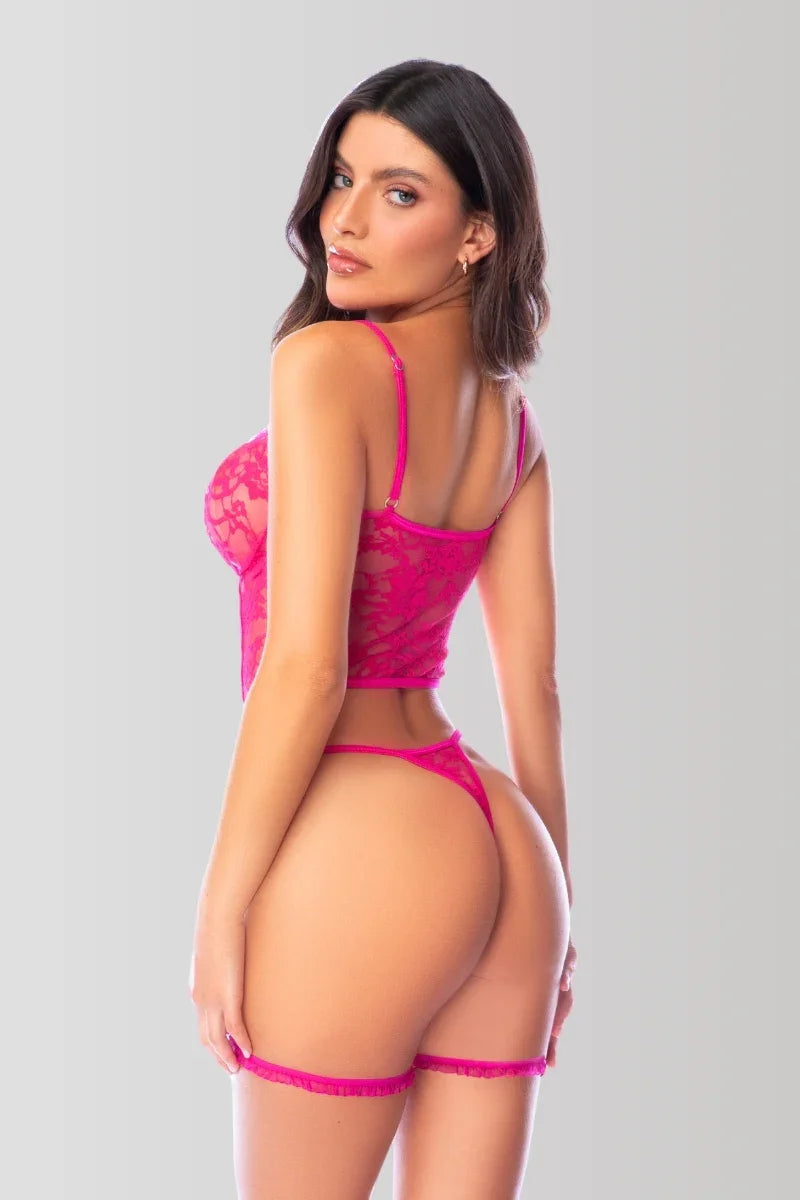
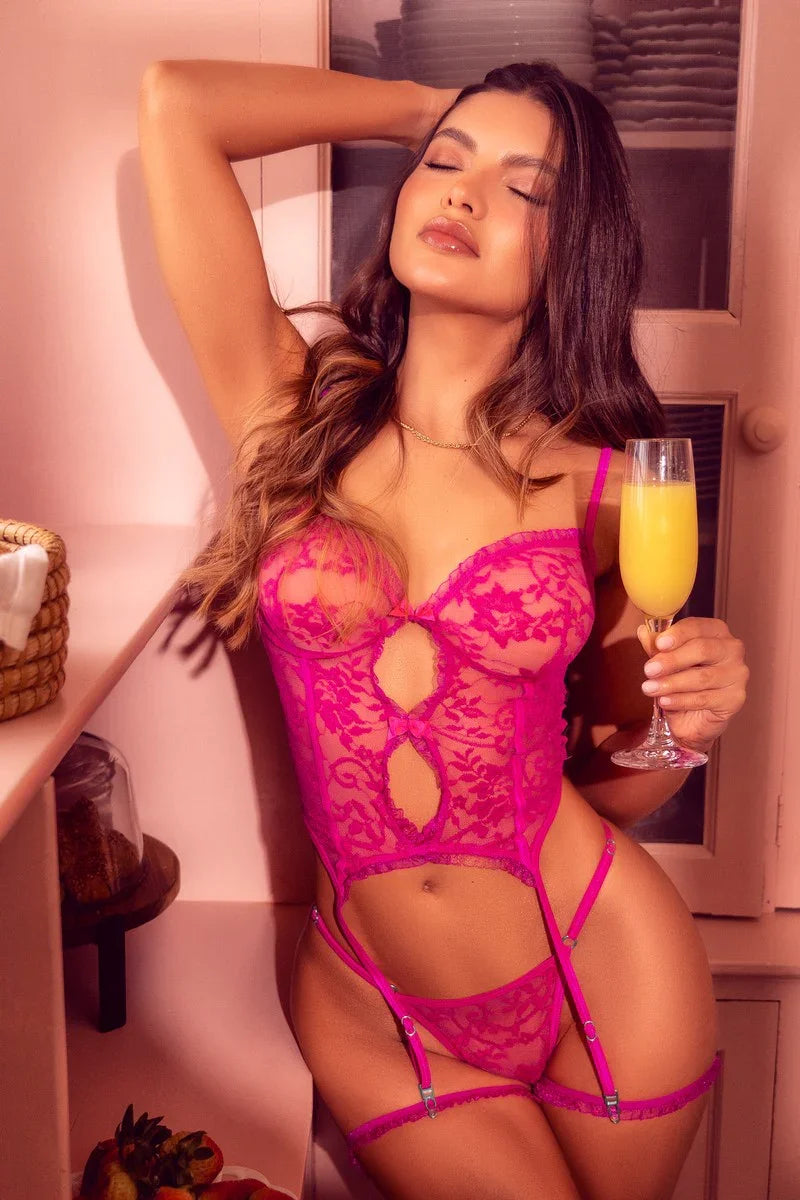
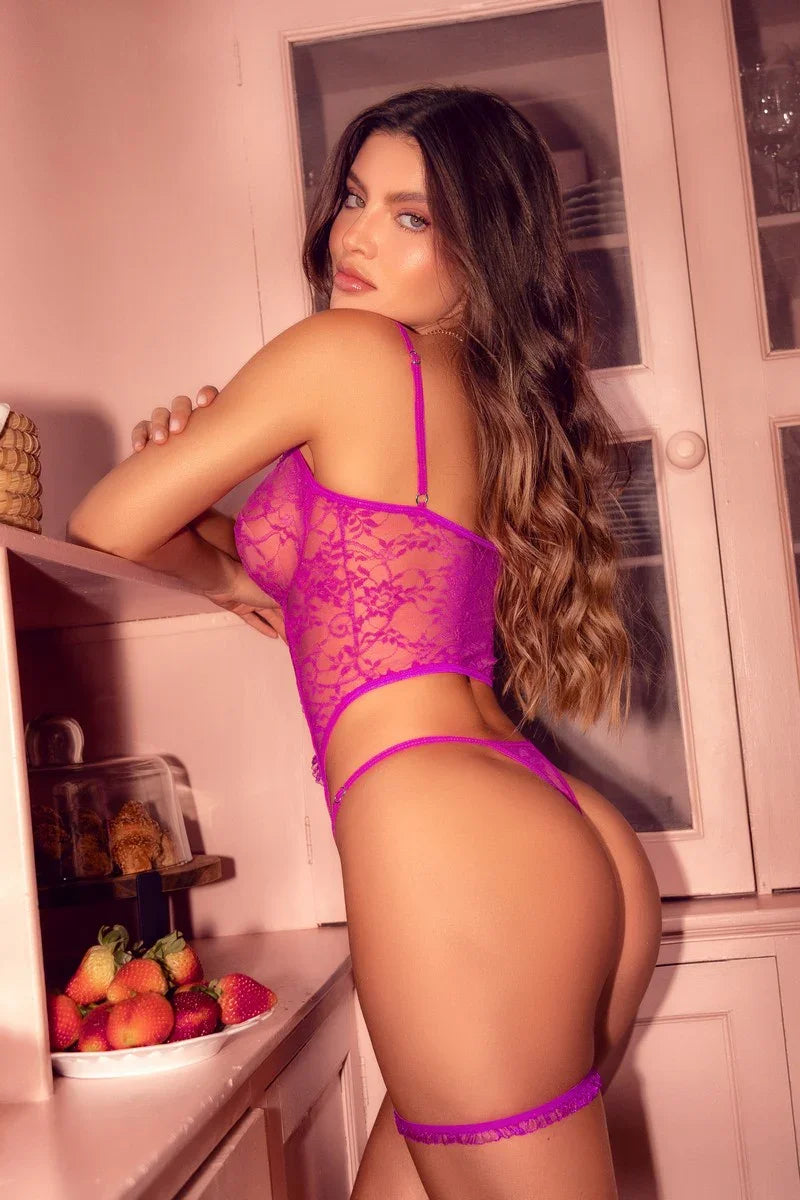
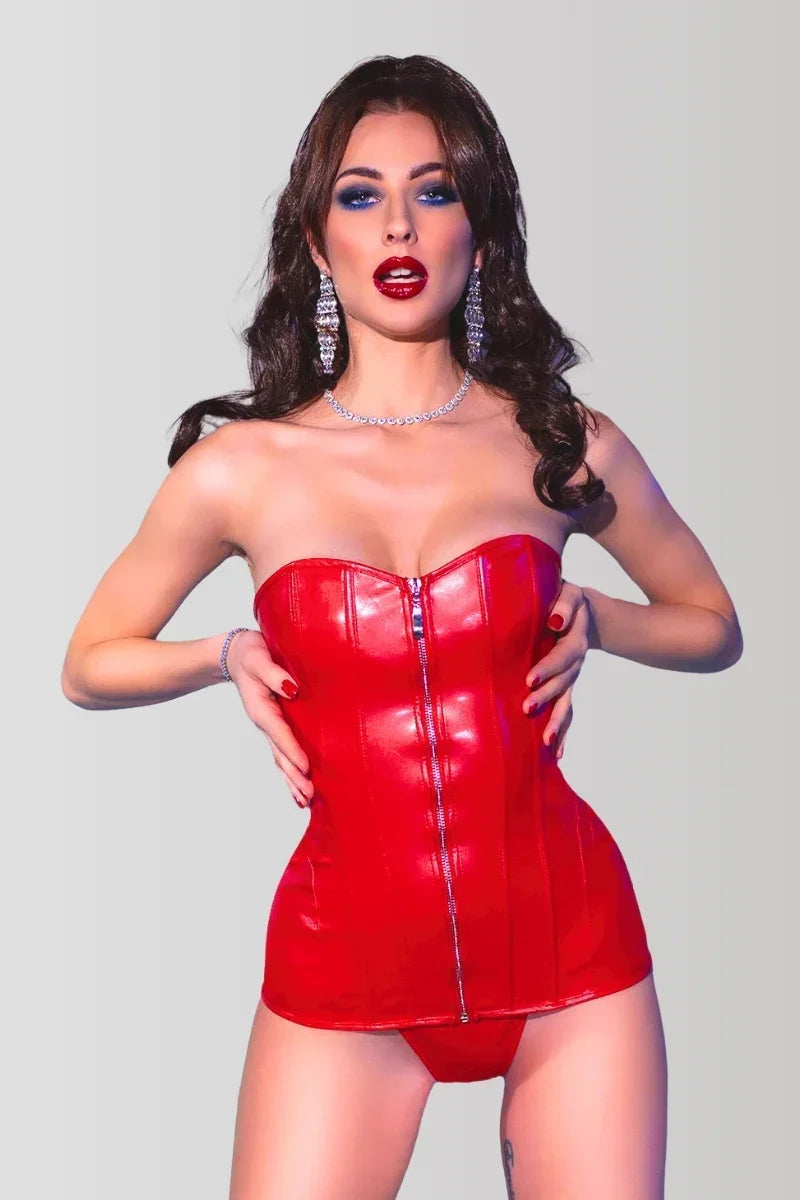
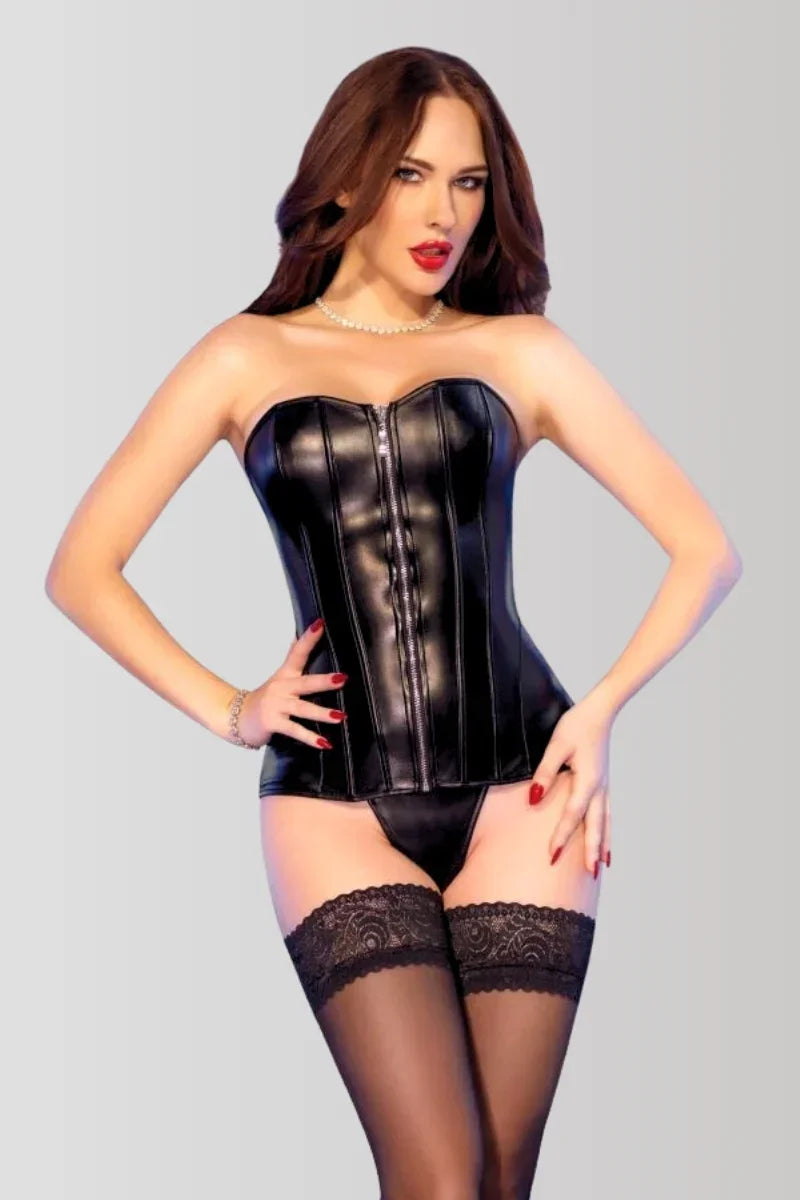
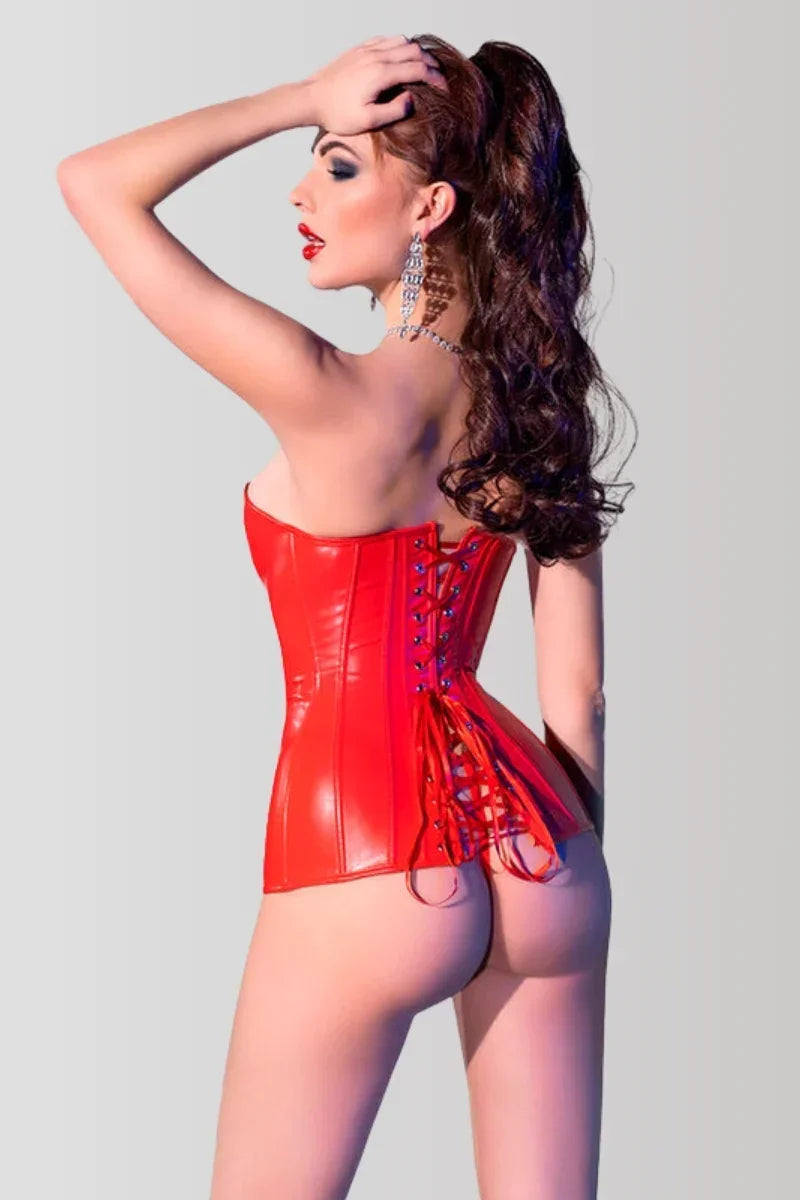
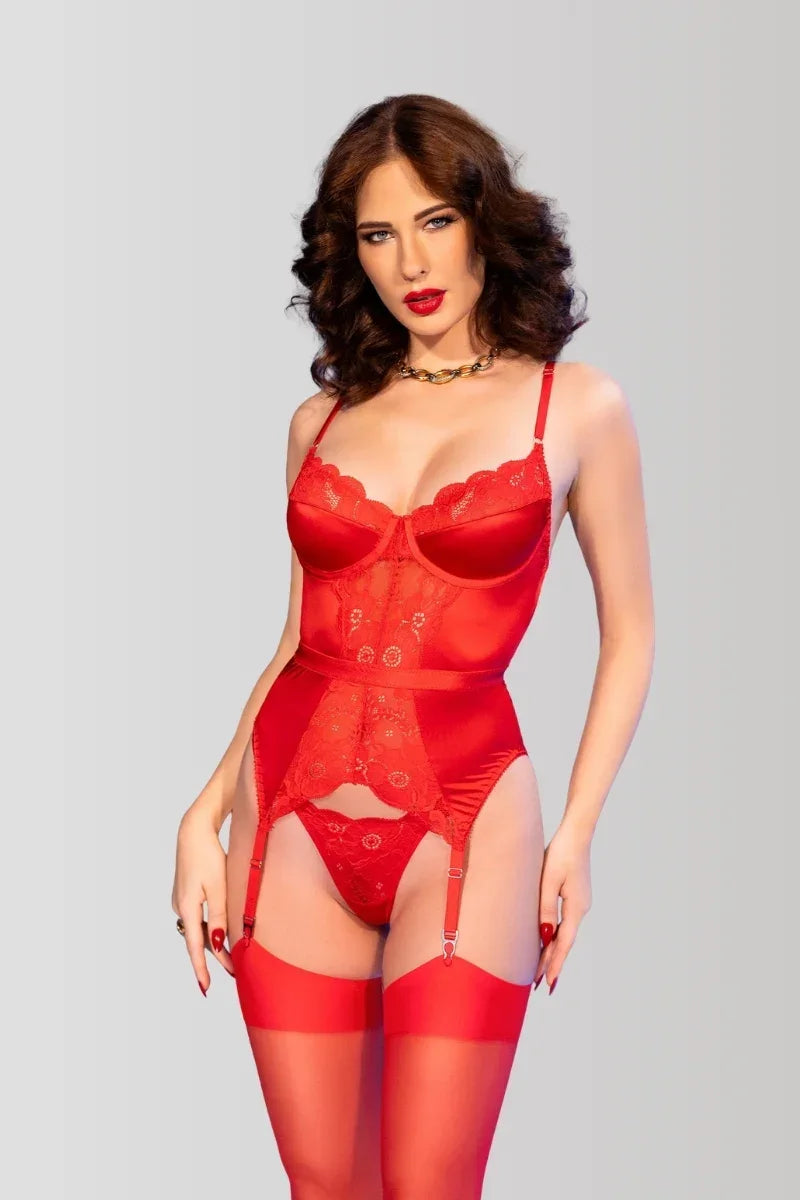
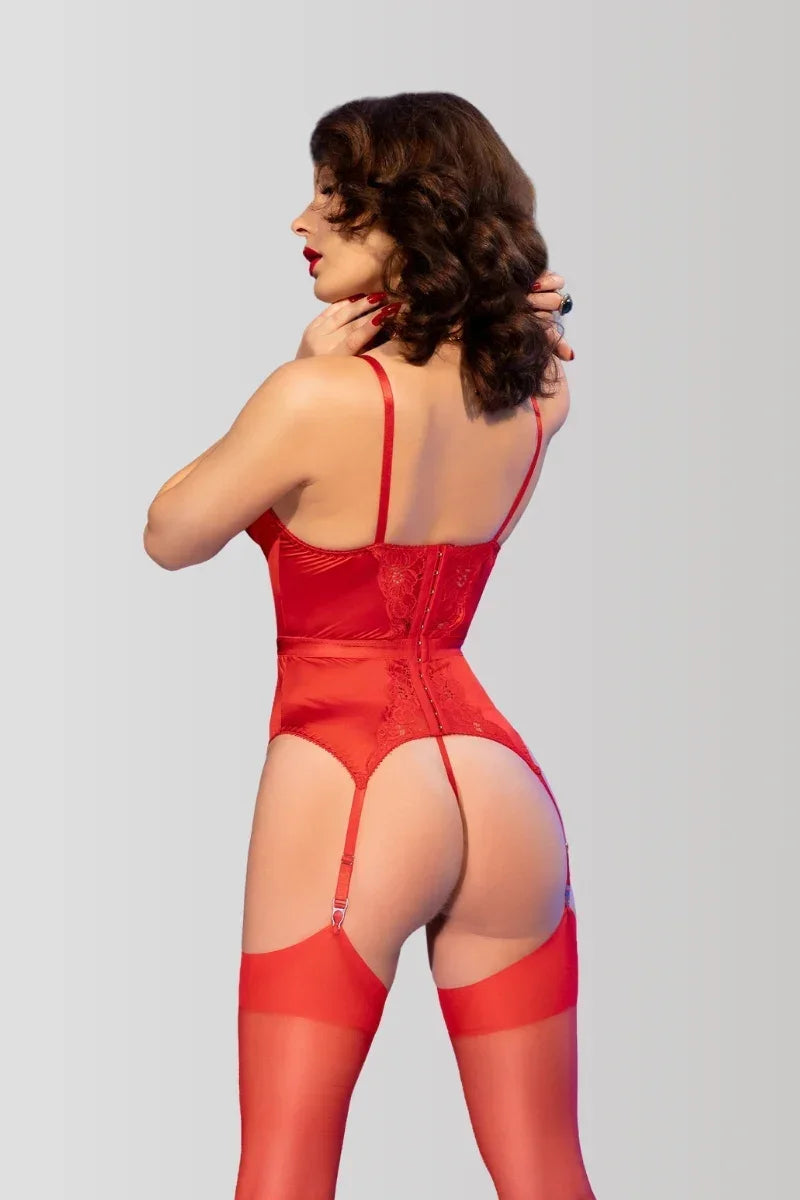
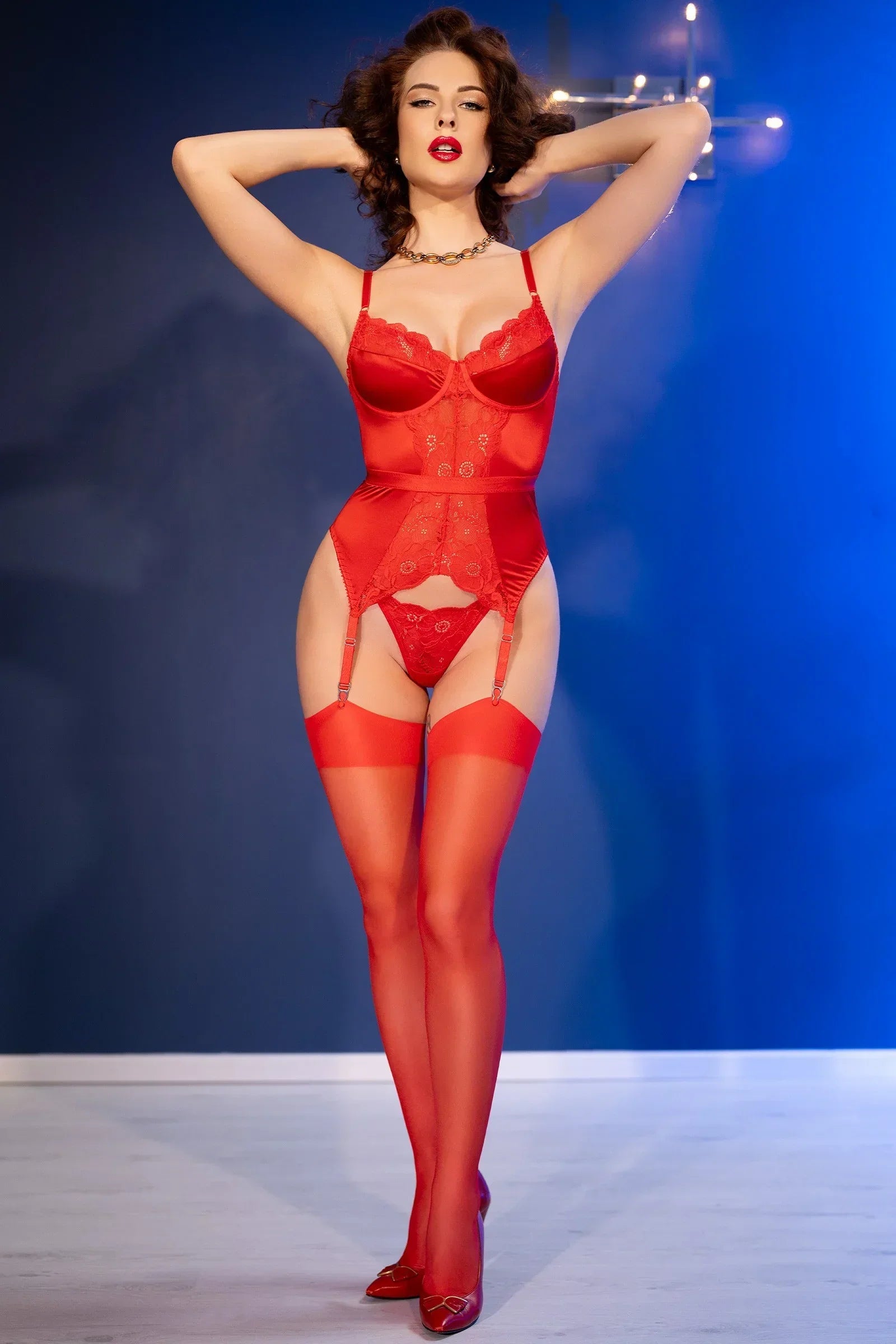
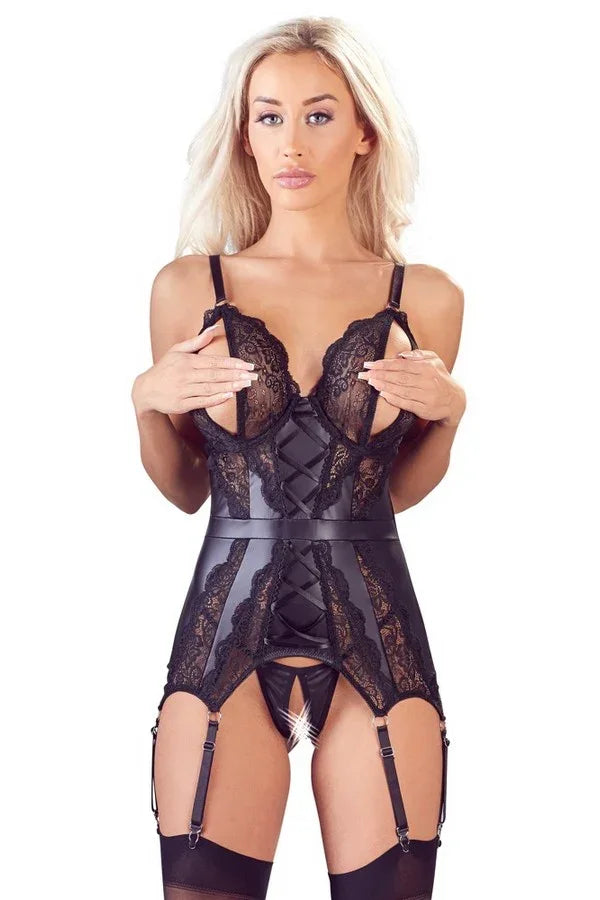
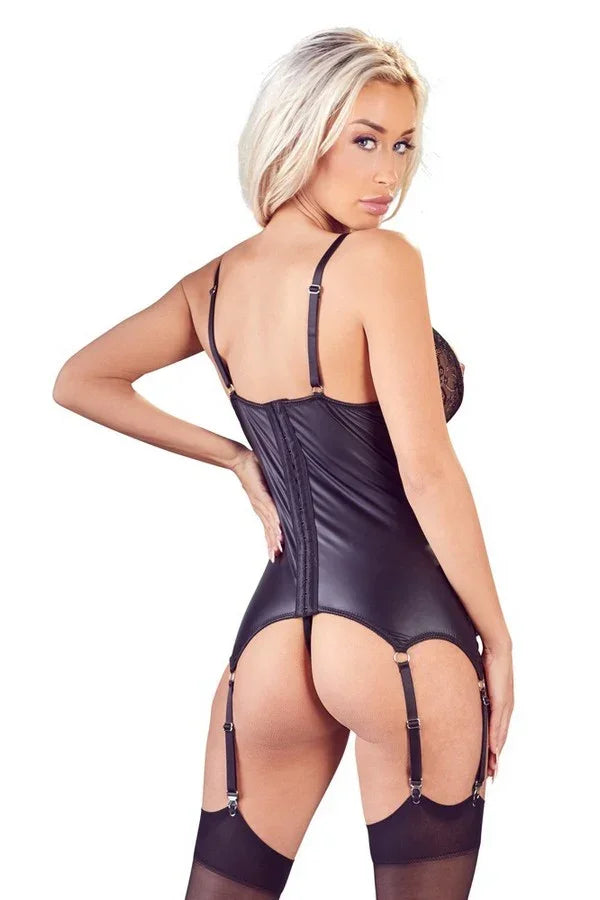
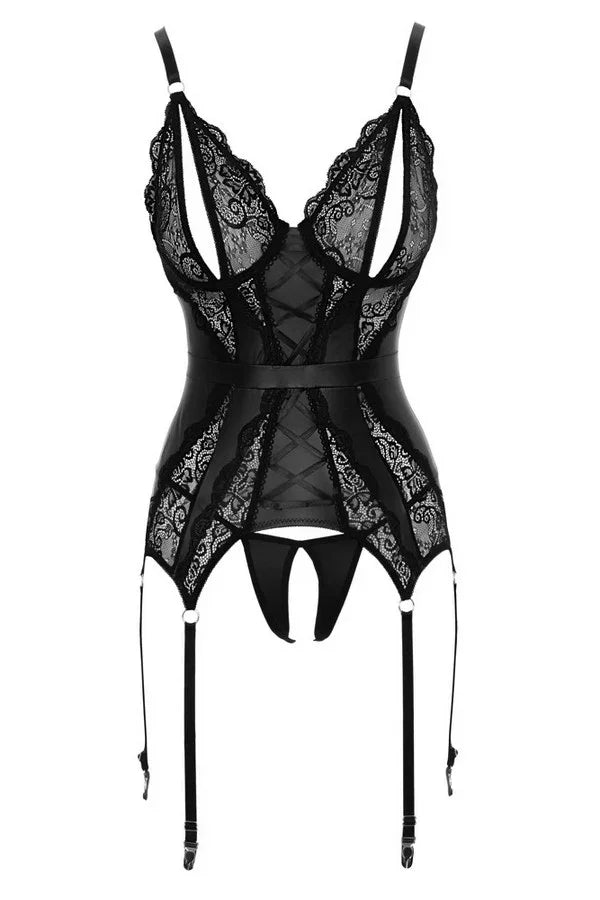
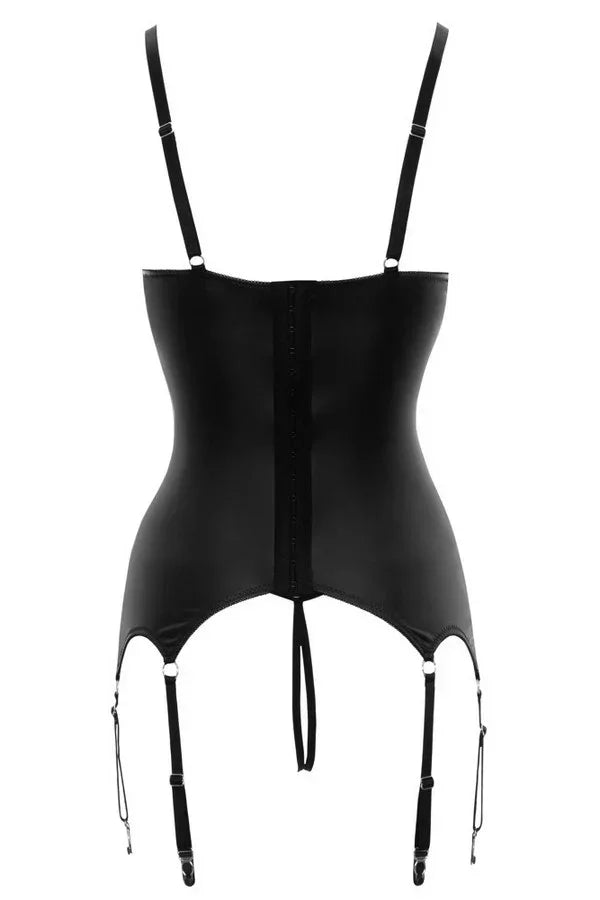
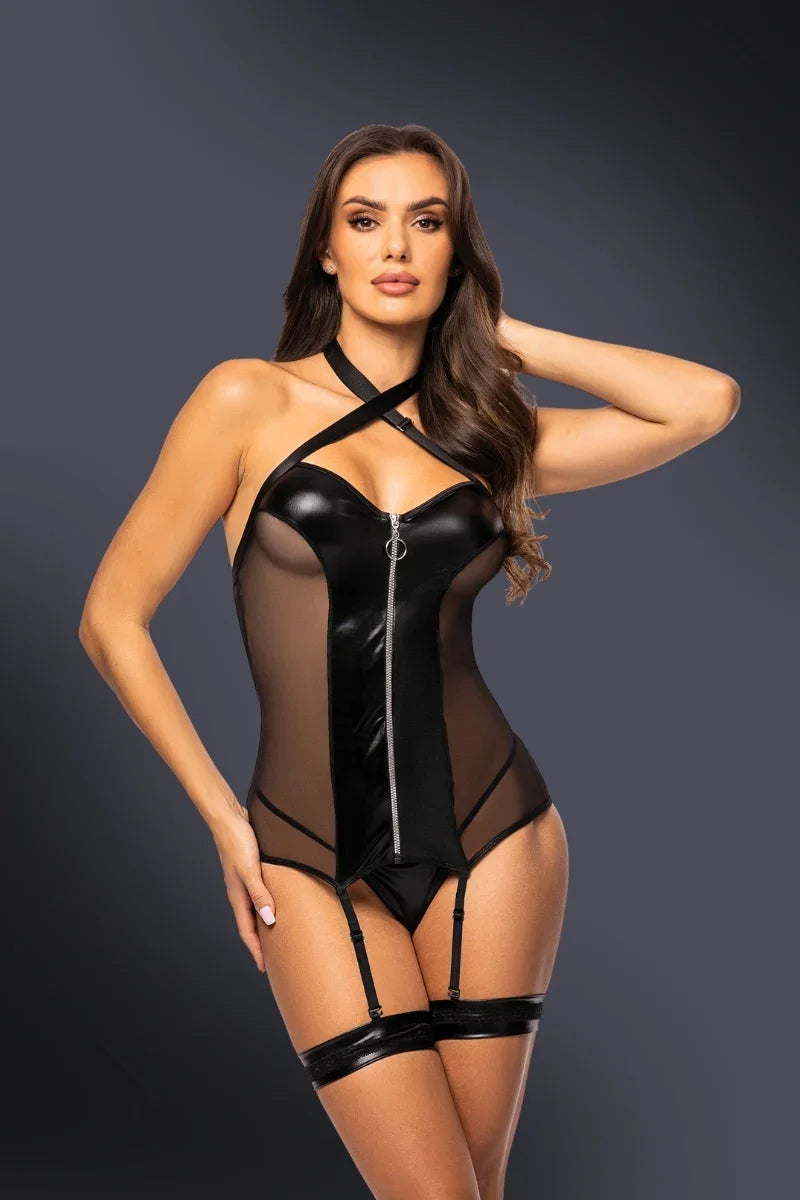
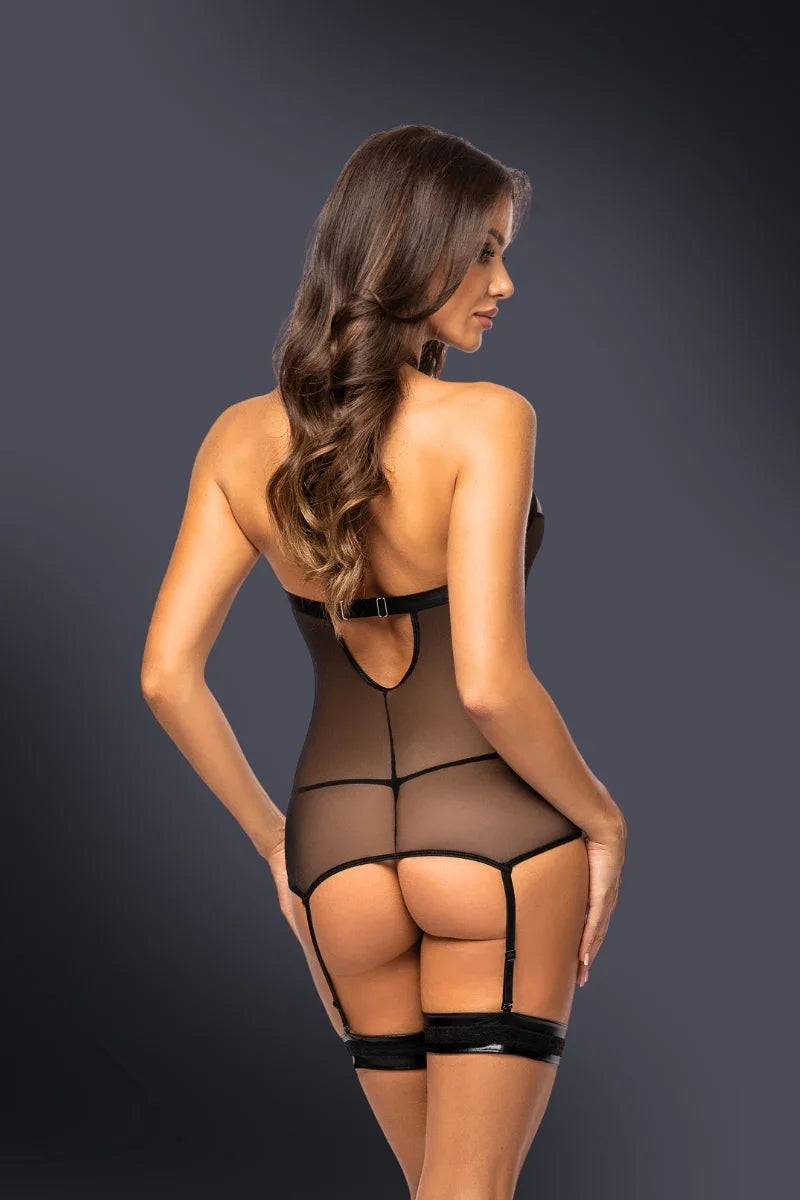
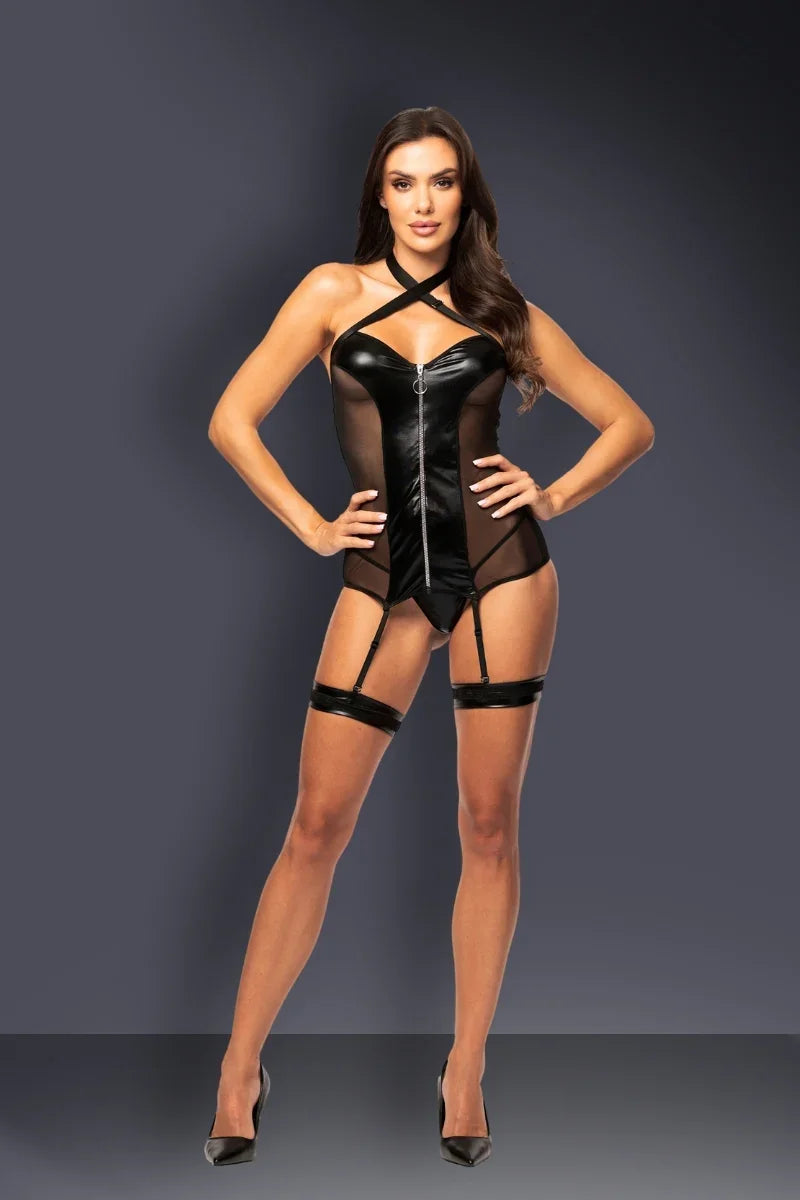
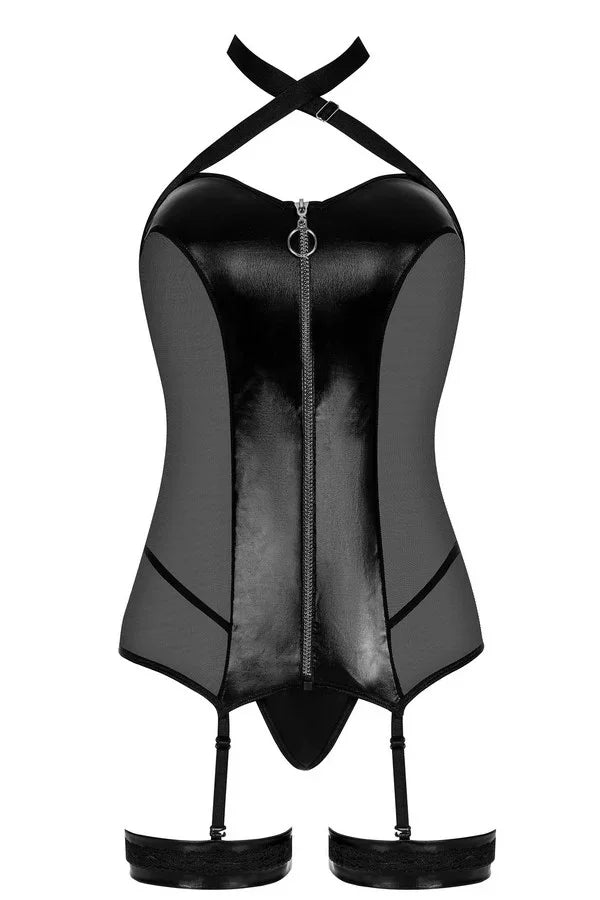
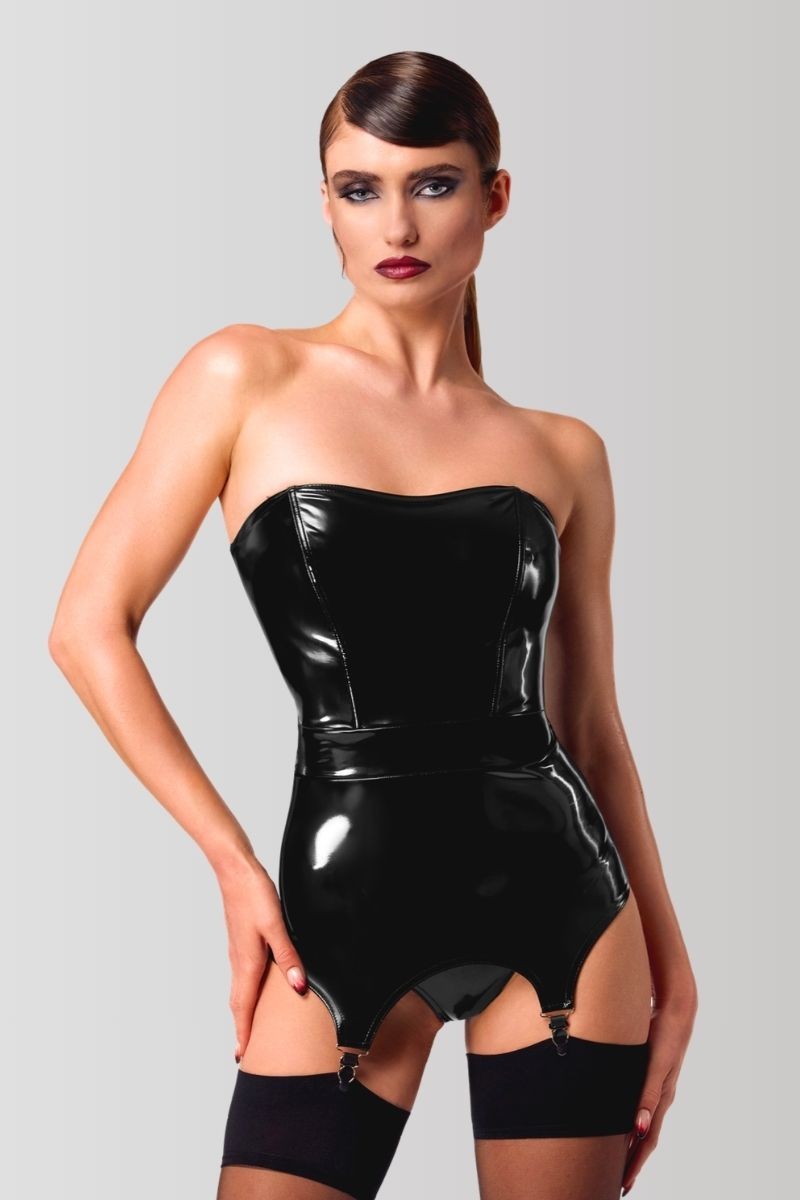
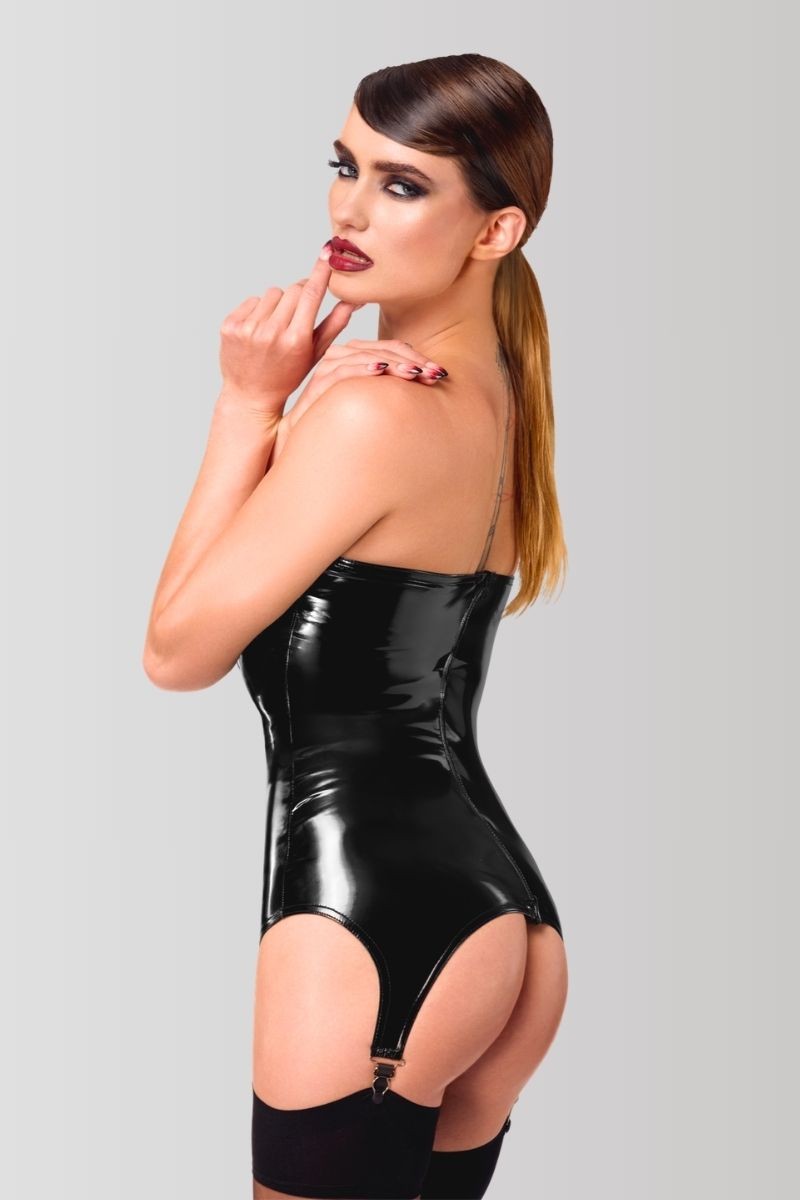
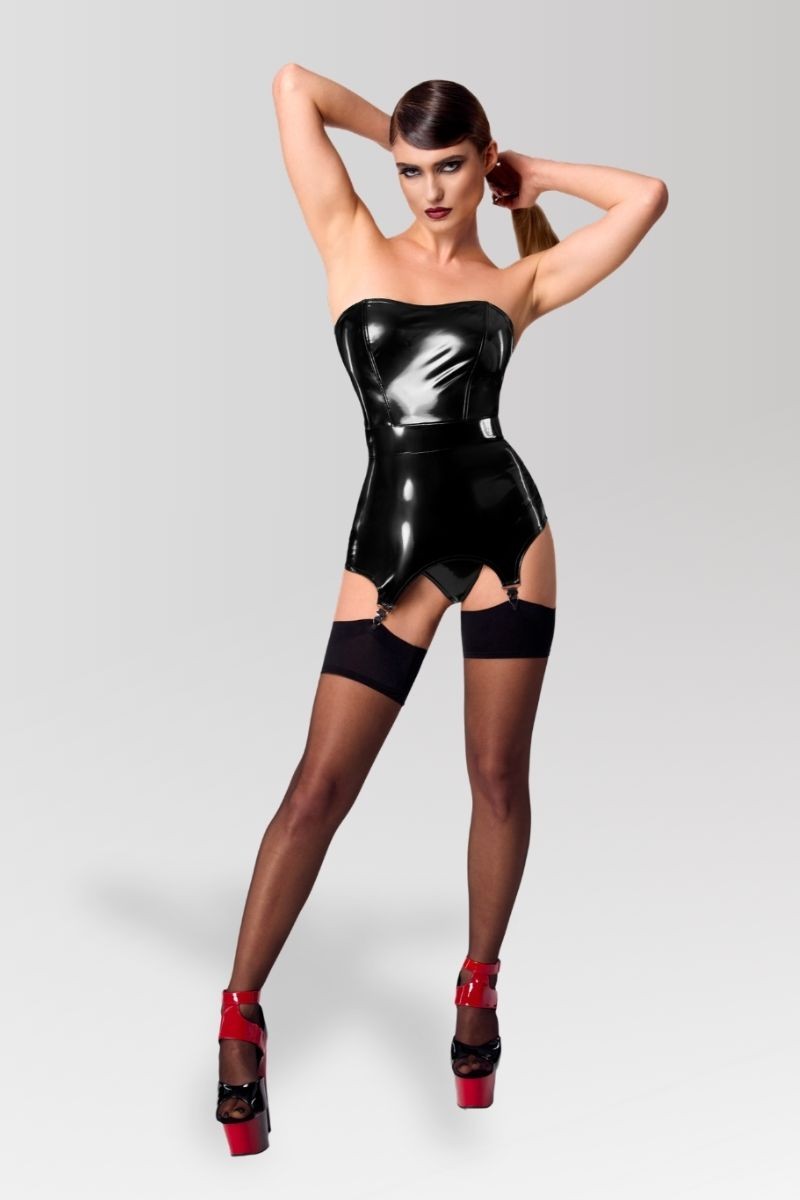
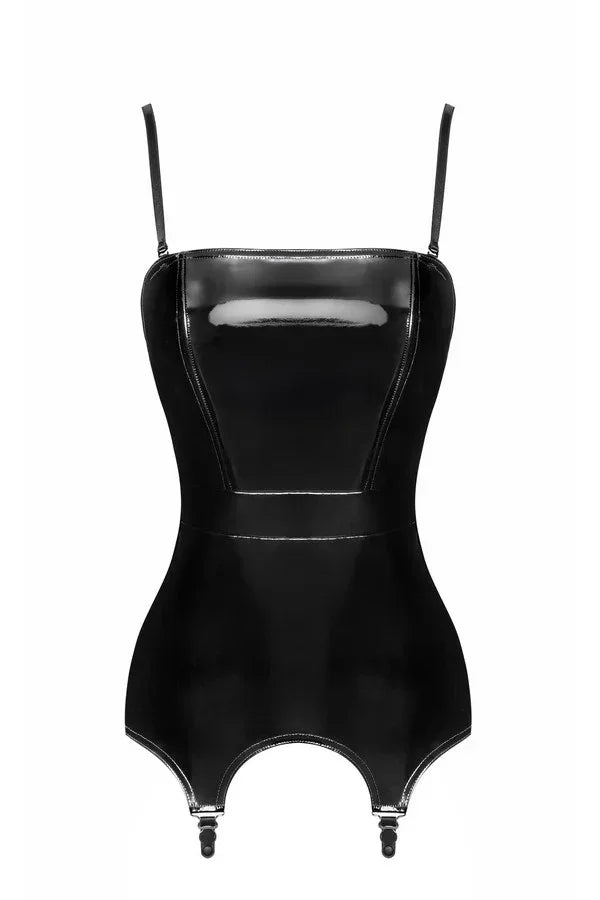
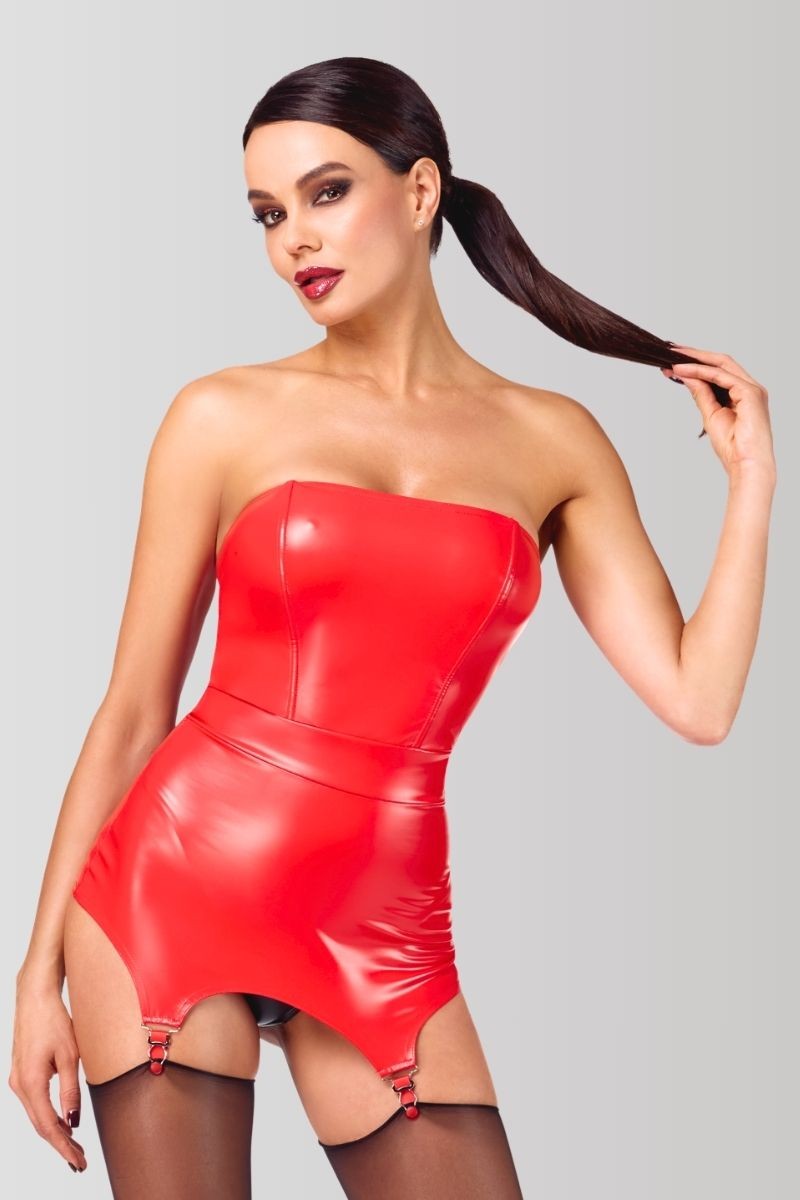
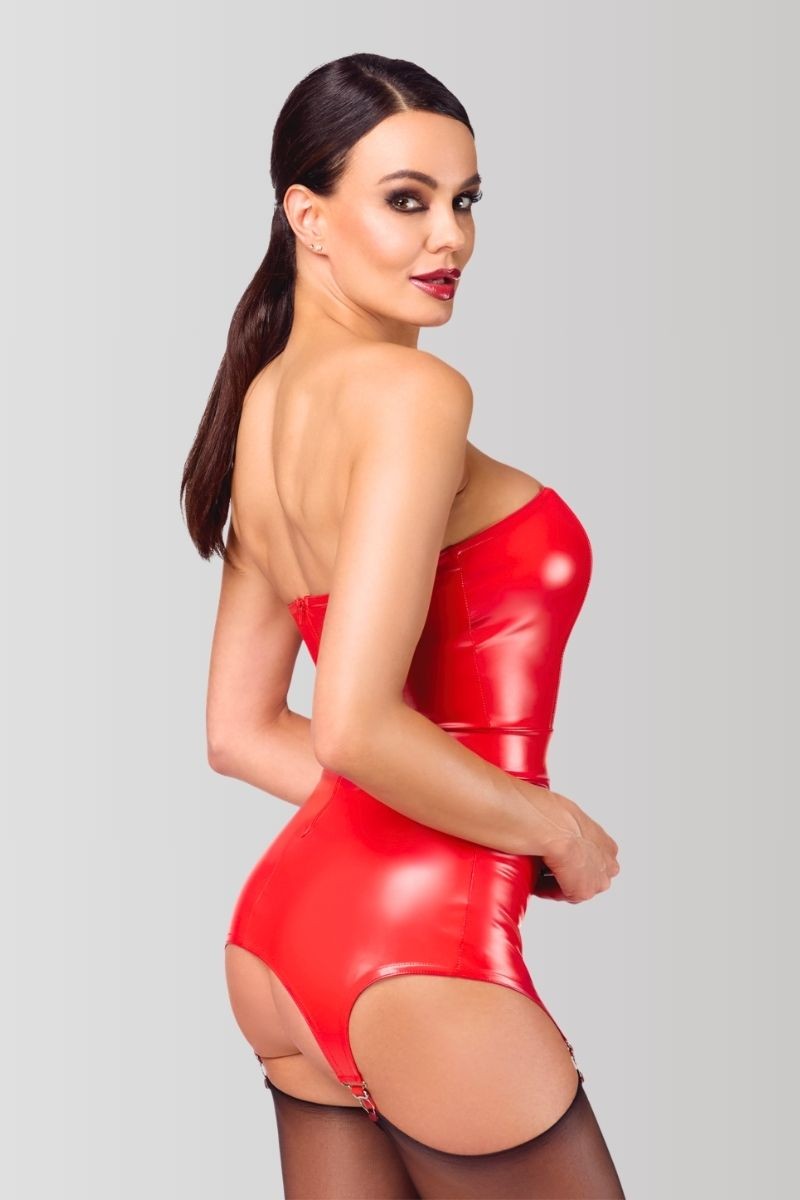
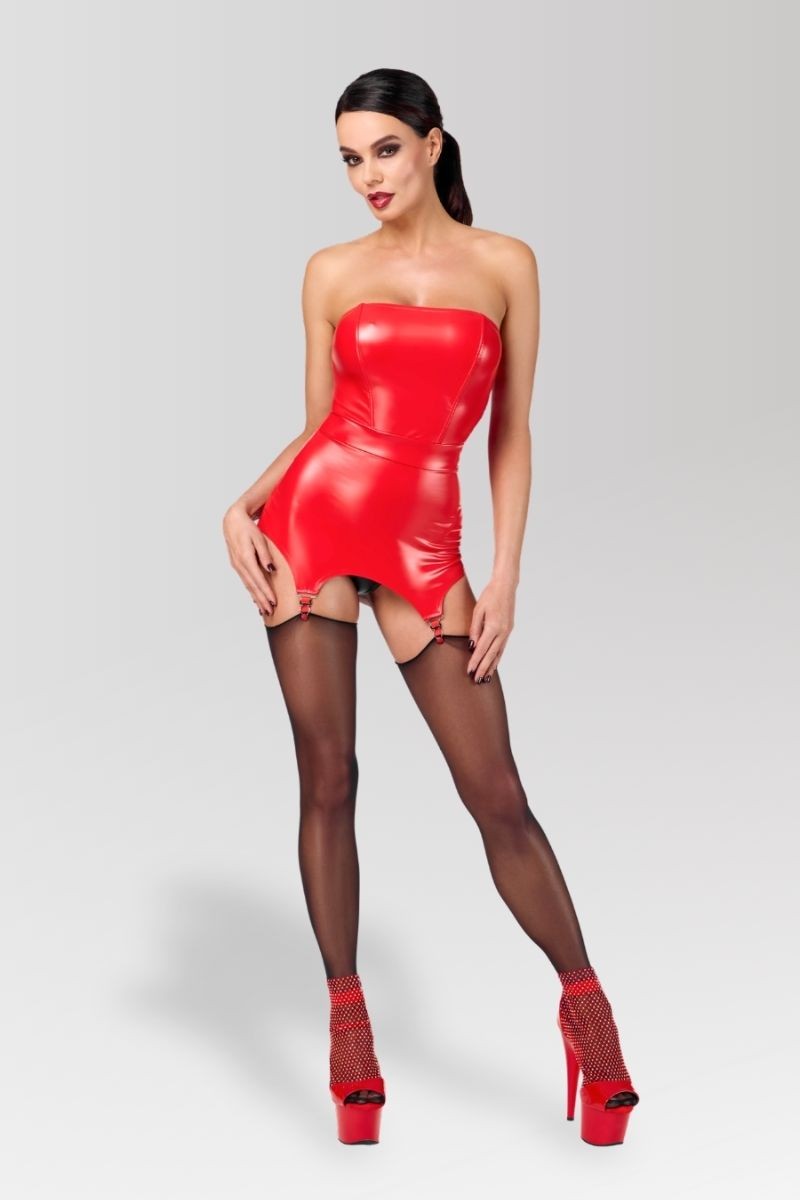
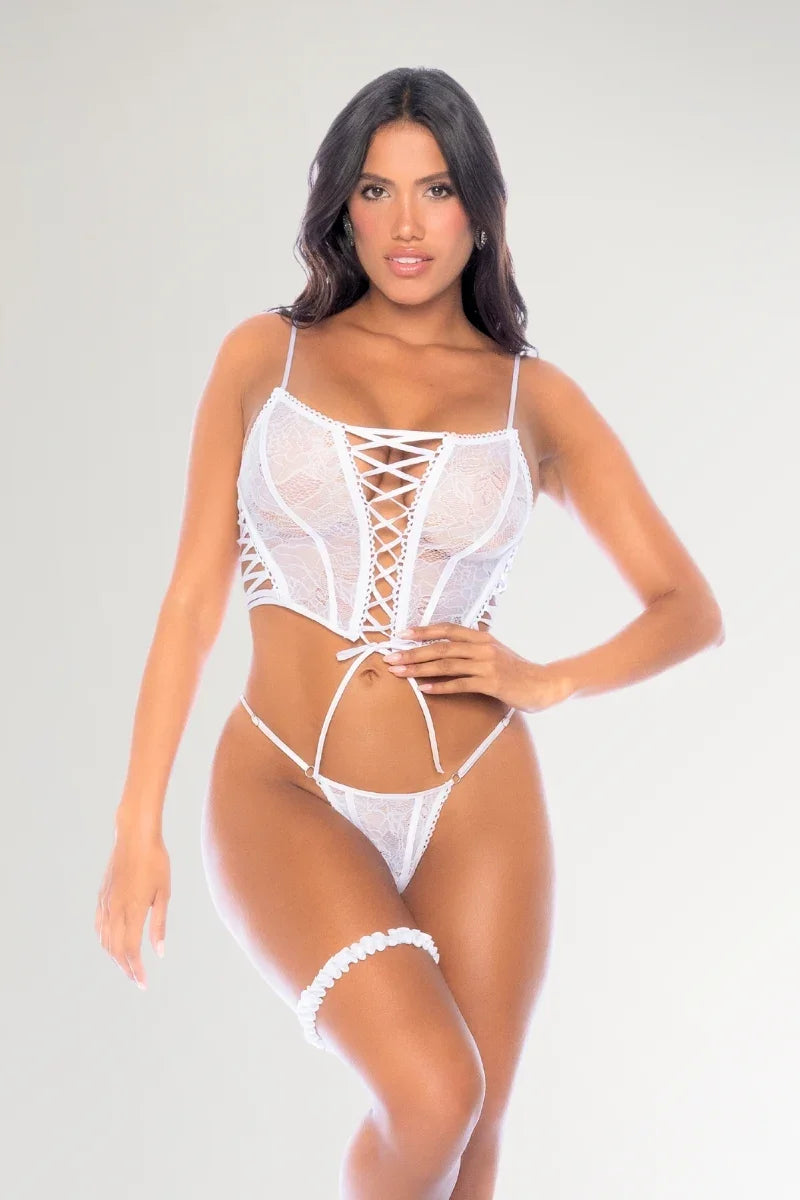
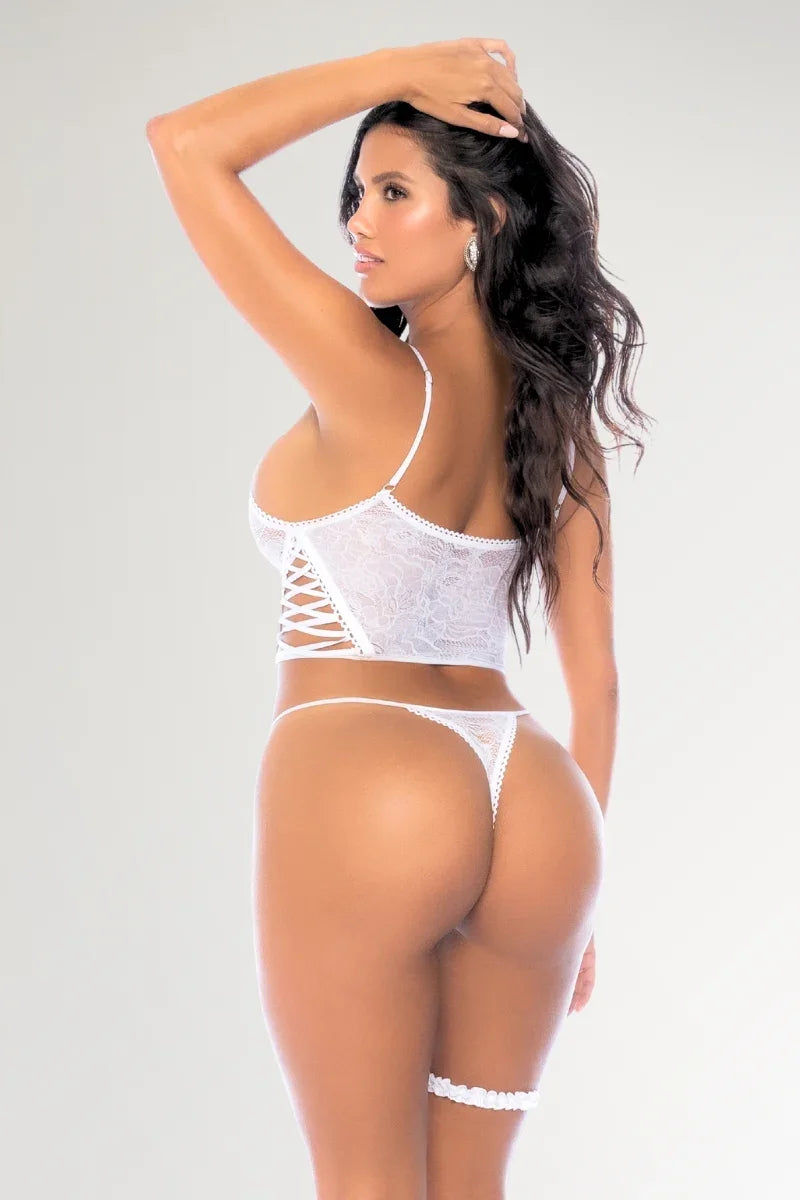
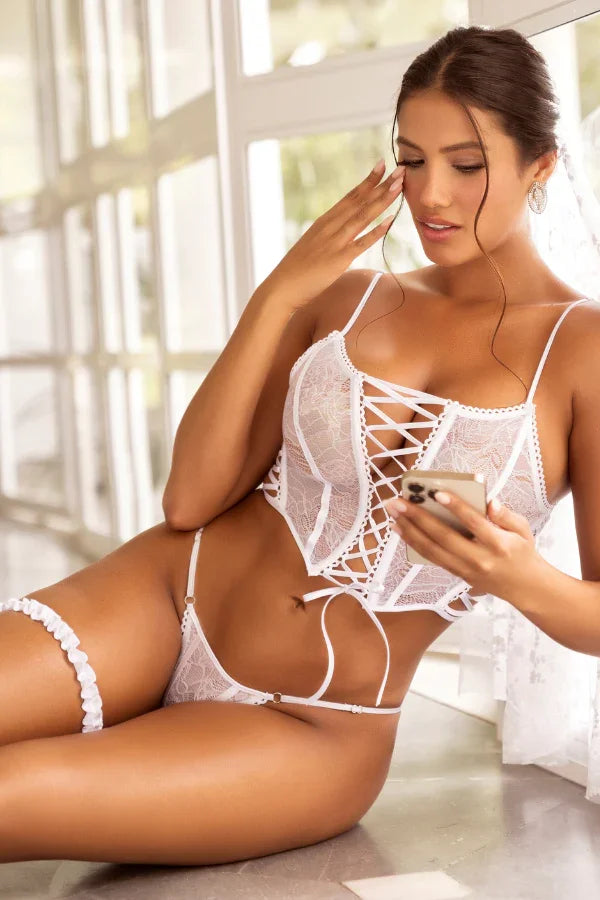
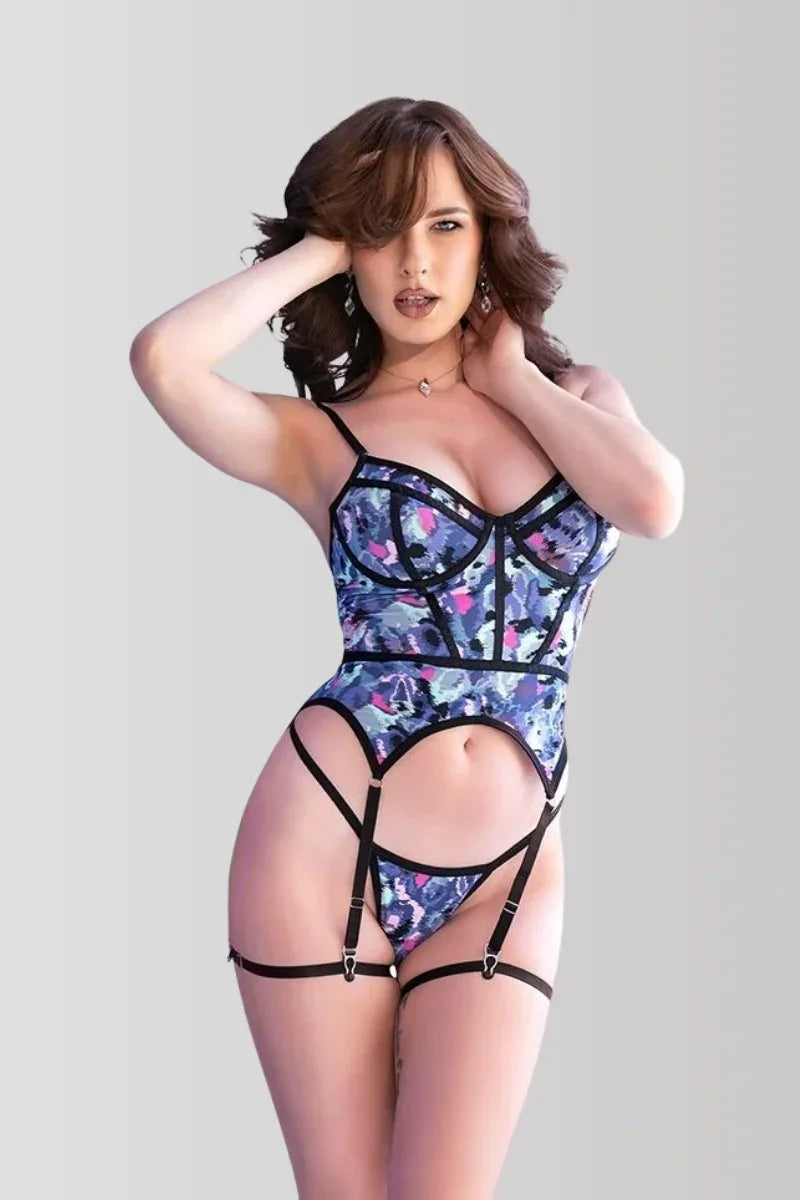
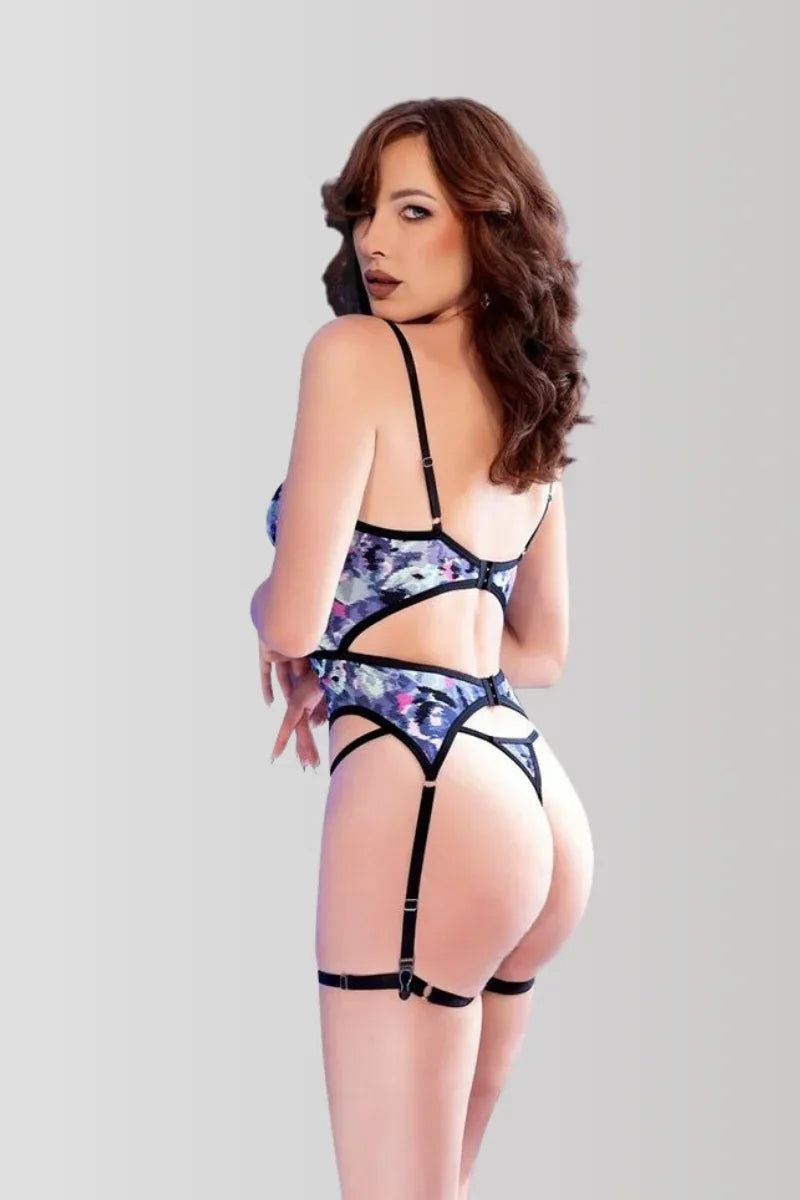
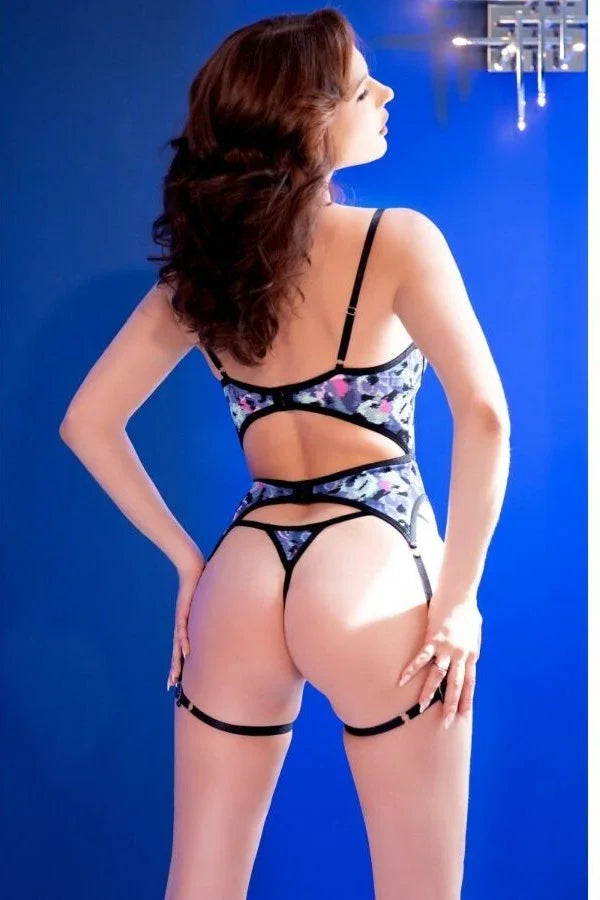
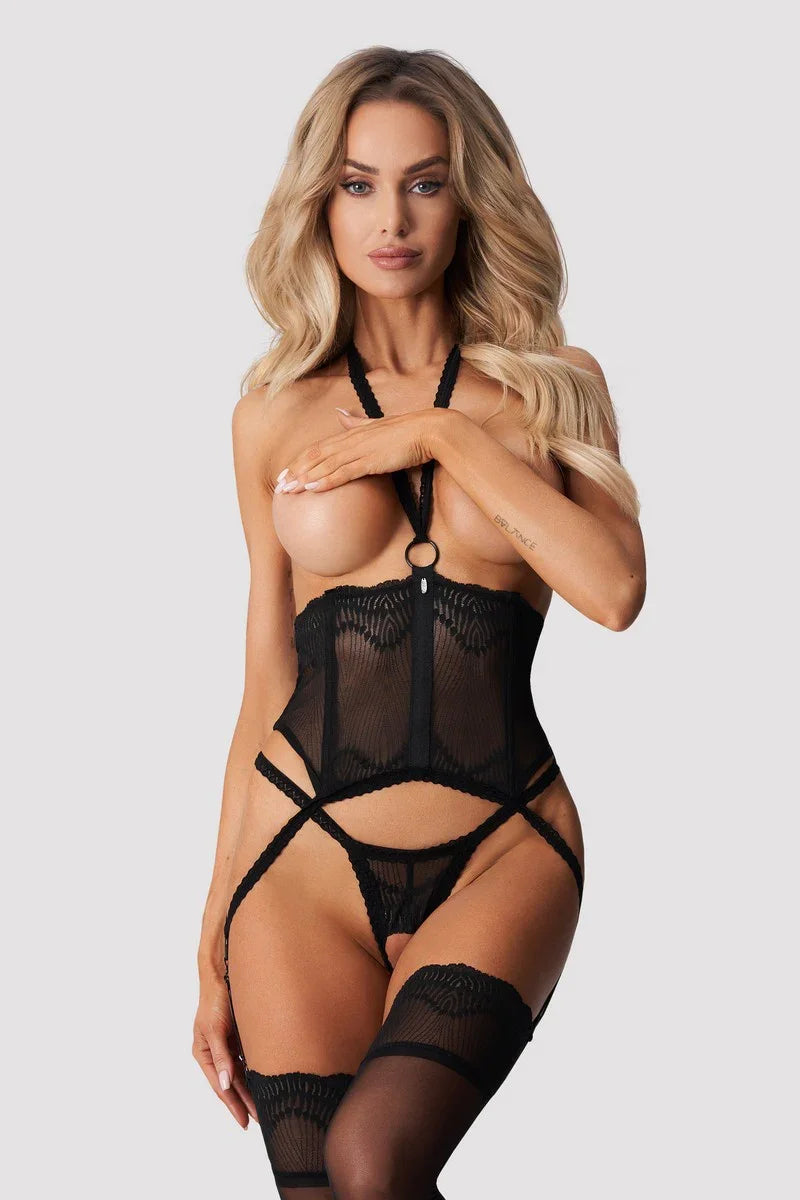
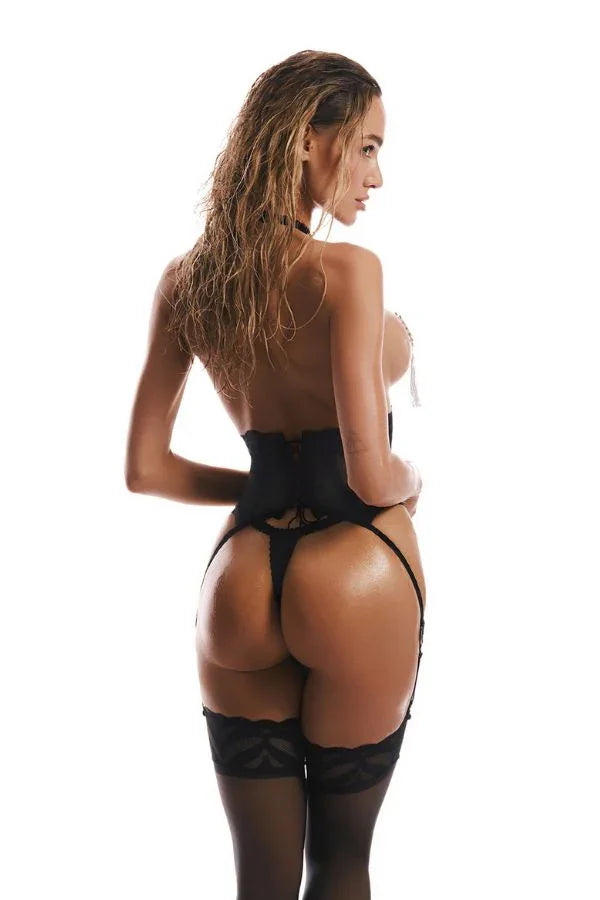
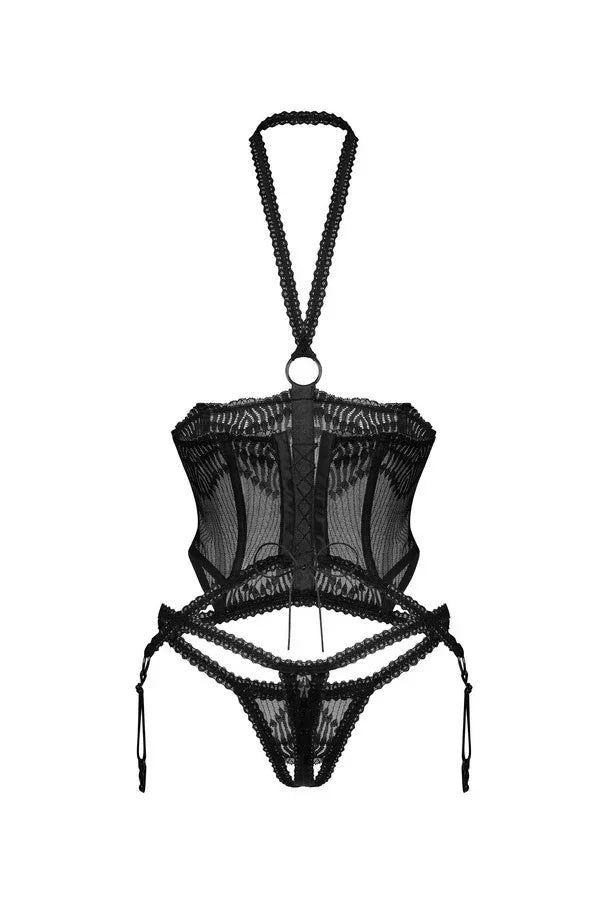
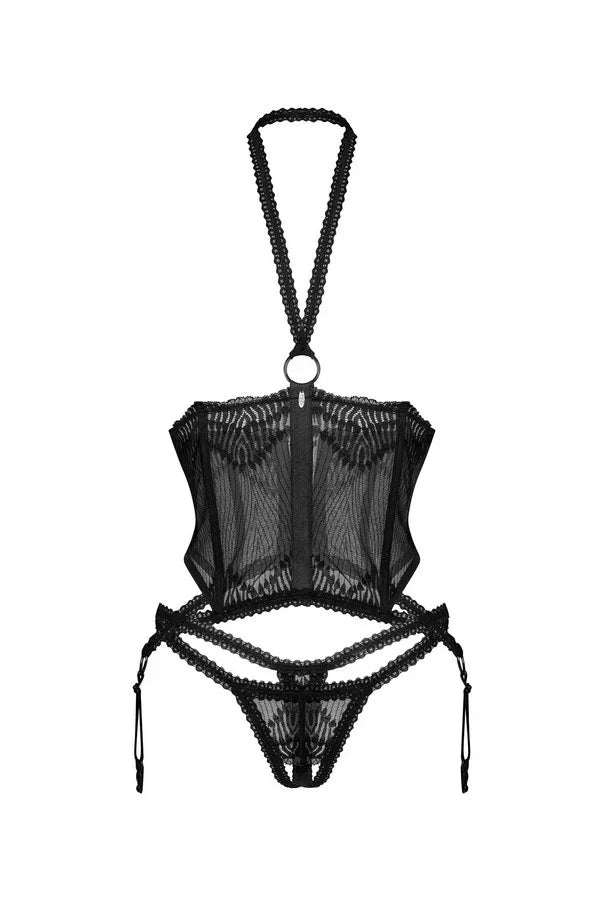
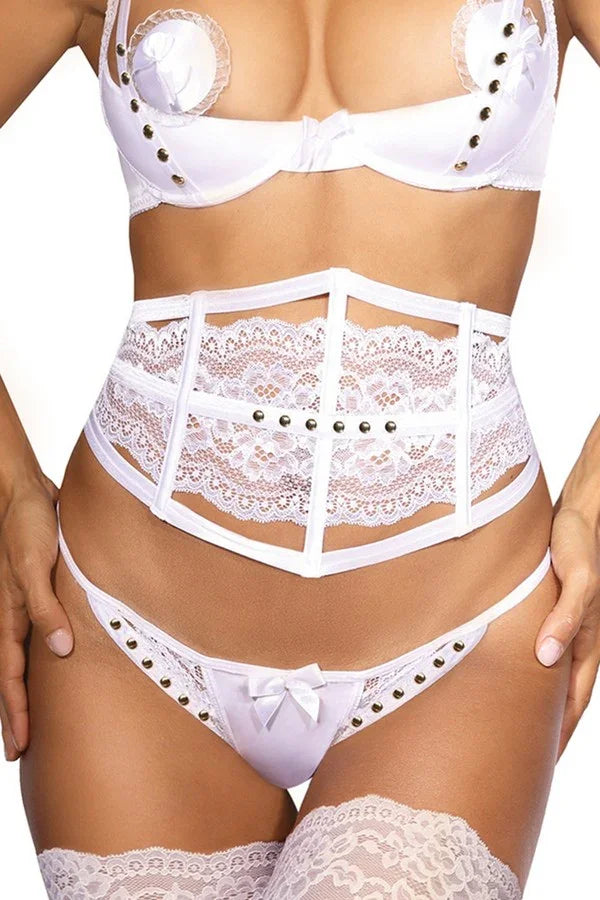
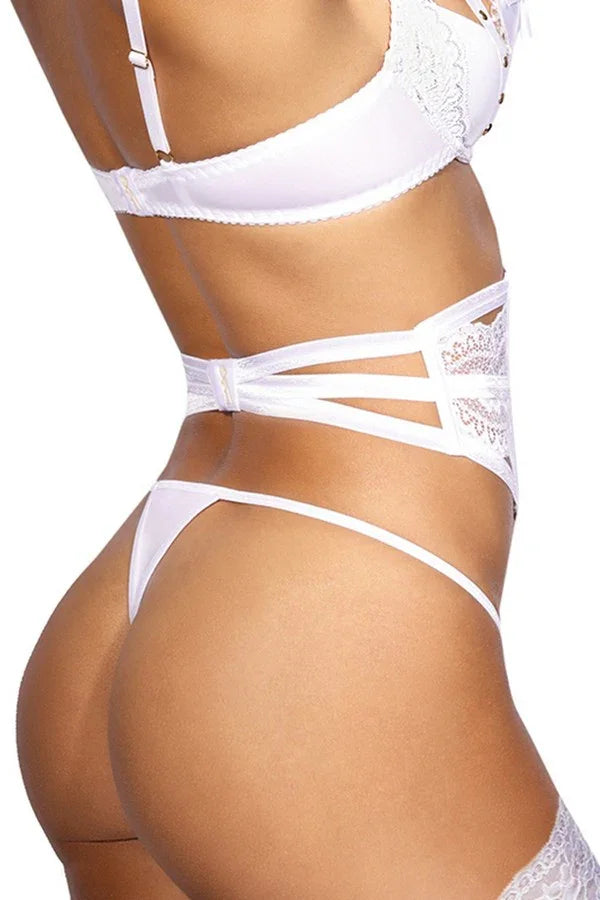
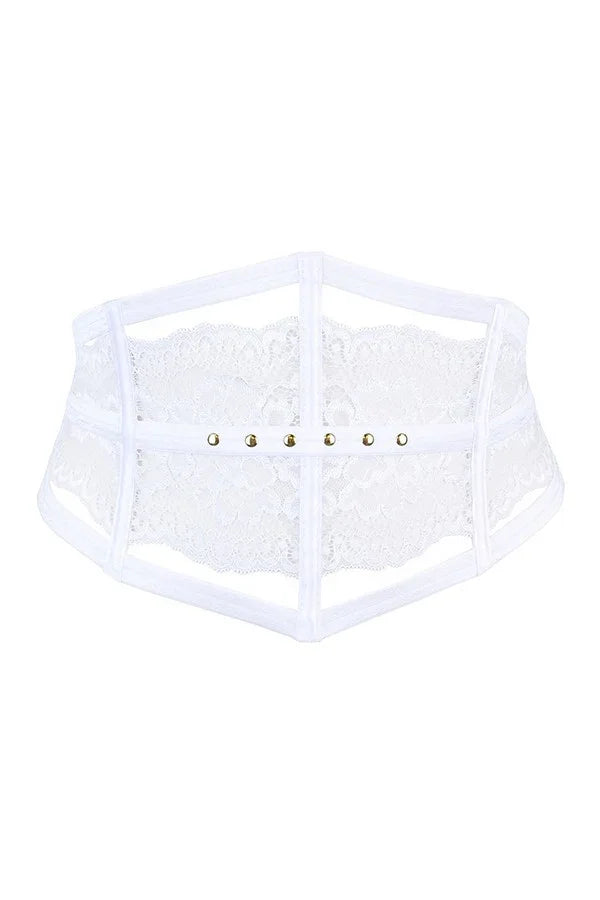
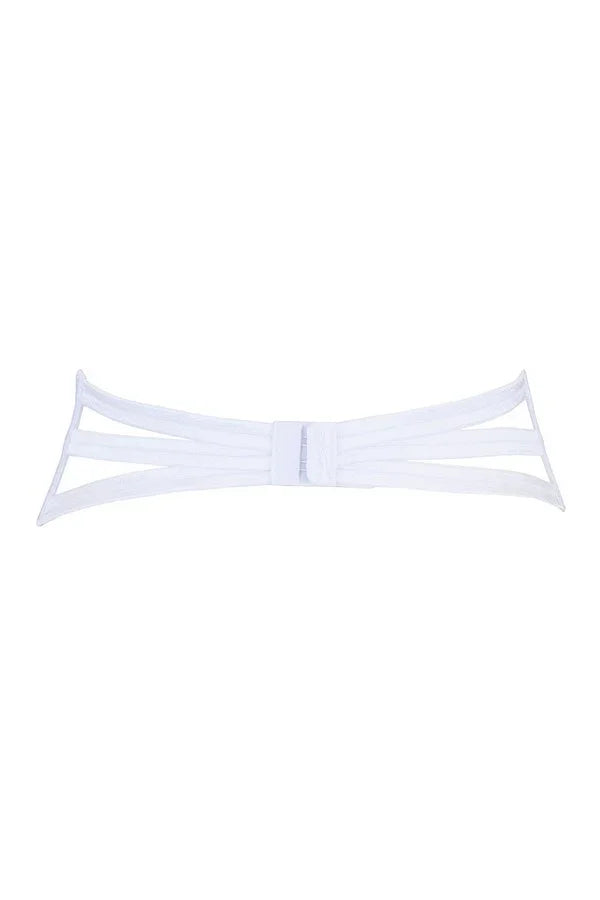
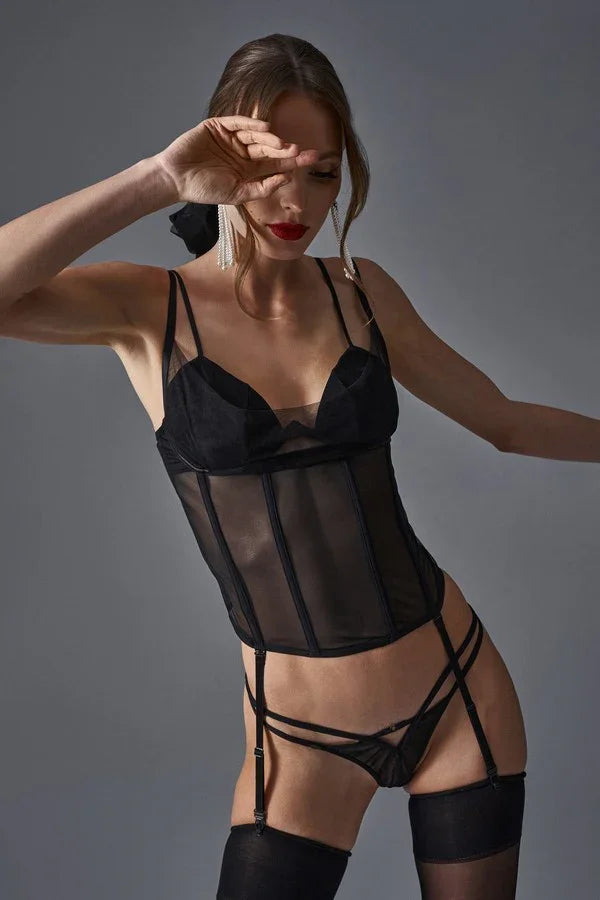
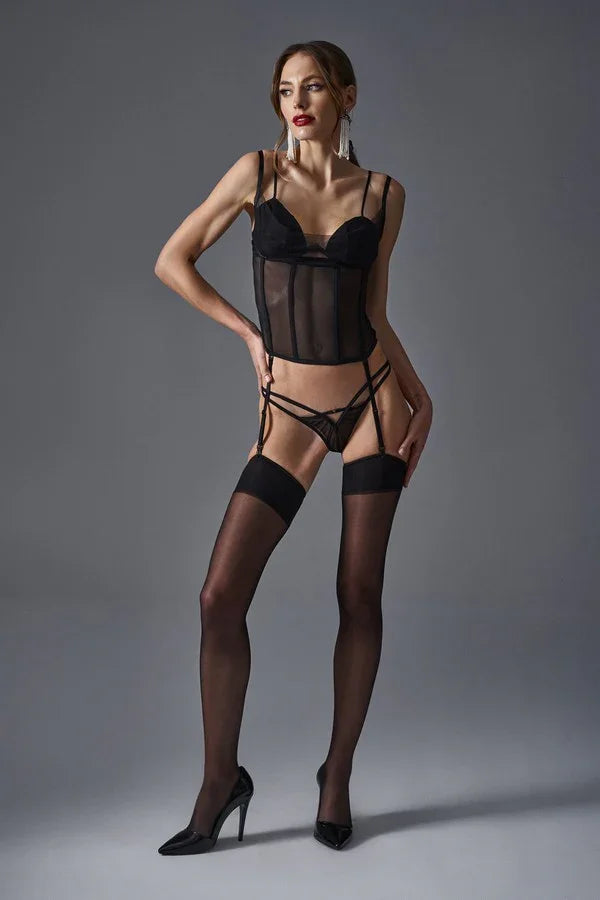
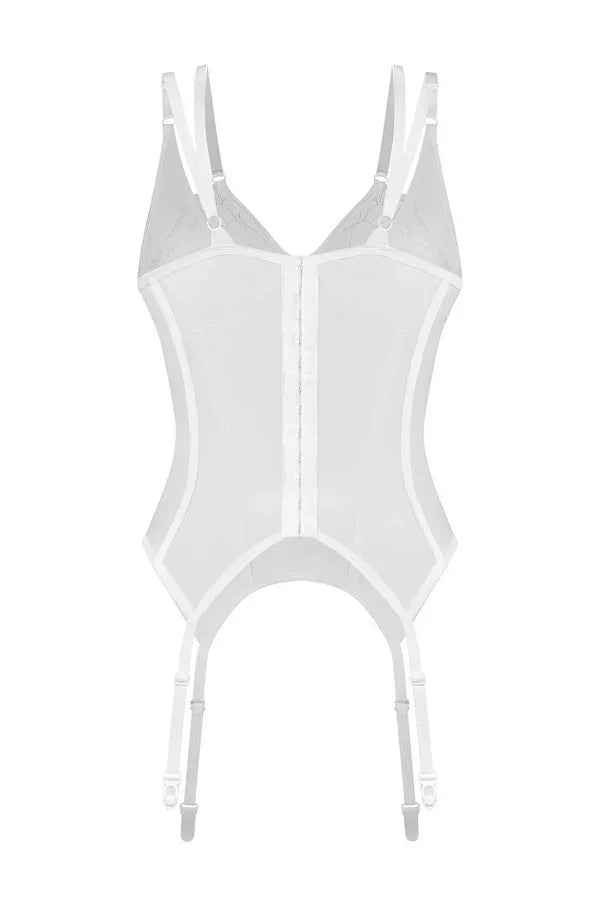
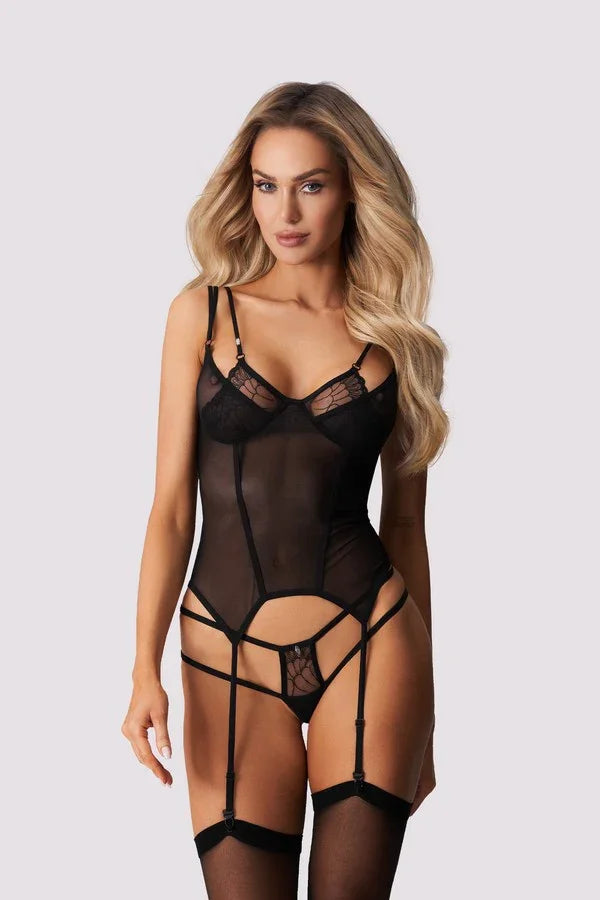
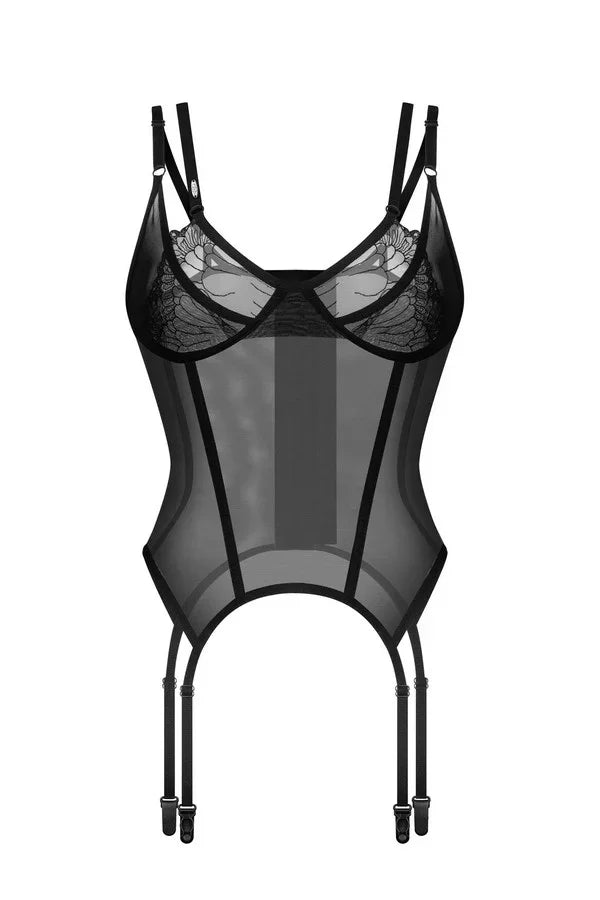
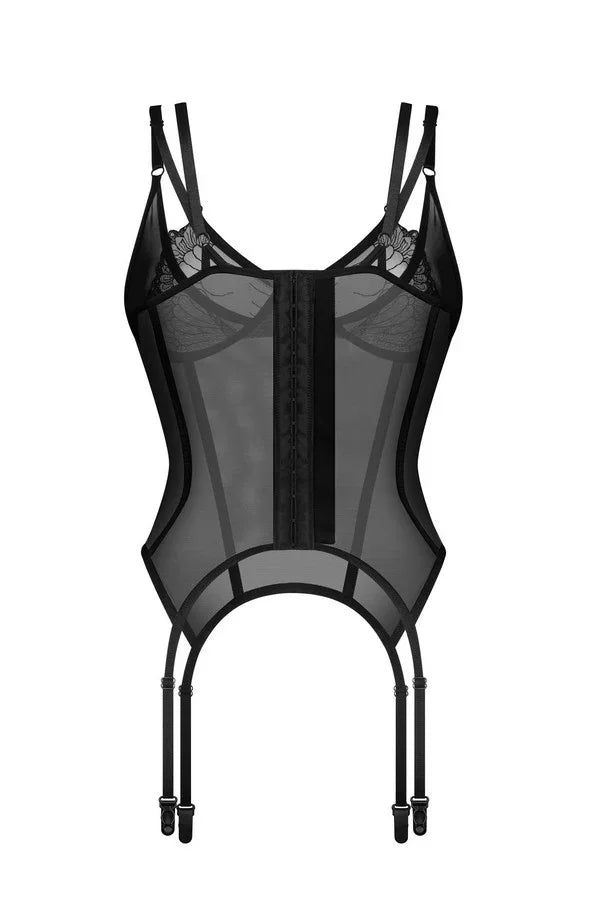
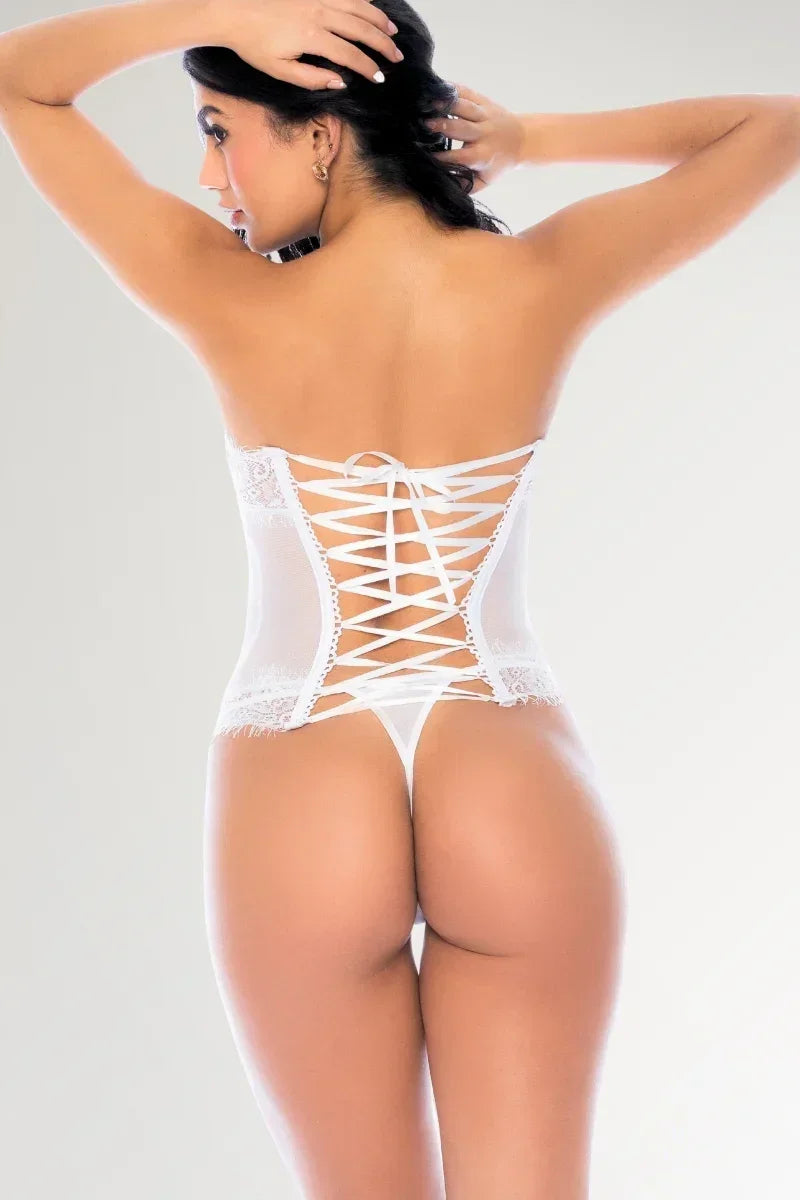
Because a basque is a structured piece that needs to fit both your bust and your waist, getting the size right is crucial.
Three measurements to take:
- Bust (at the fullest point): determines your cup size and bust comfort
- Waist (at the narrowest point, the natural waist): determines the main fit of the basque
- Hips (the widest part of your bottom): ensures the lower edge of the basque doesn’t dig in
For styles in standard sizing (S, M, L, XL): base your choice primarily on your waist measurement. If you fall between two sizes, go for the larger one — a basque that’s too tight creates bulges above and below the garment, which defeats the sculpting effect entirely.
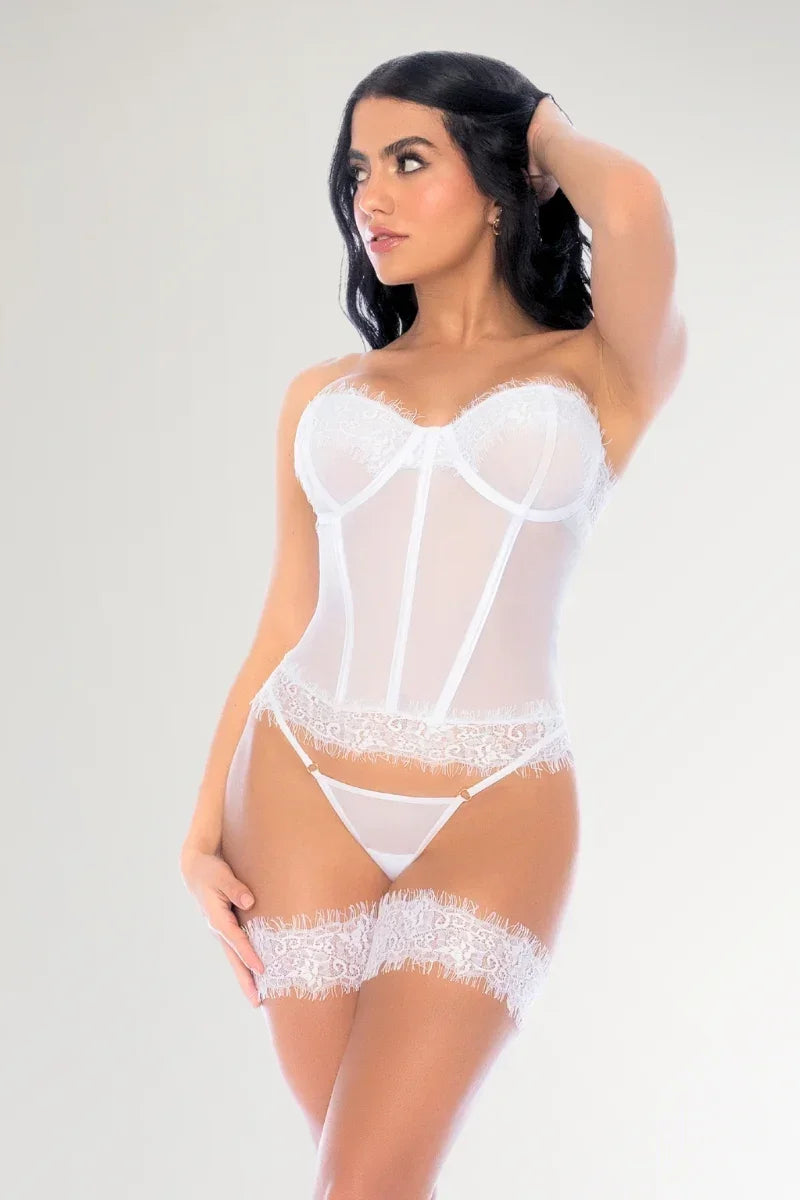
For styles with built-in cups (e.g. 32B, 34C): the size combines band size and cup, just like a bra. The band corresponds to your underbust measurement (UK 30, 32, 34, 36... / EU 65, 70, 75, 80...), and the cup is calculated from the difference between your bust and underbust.
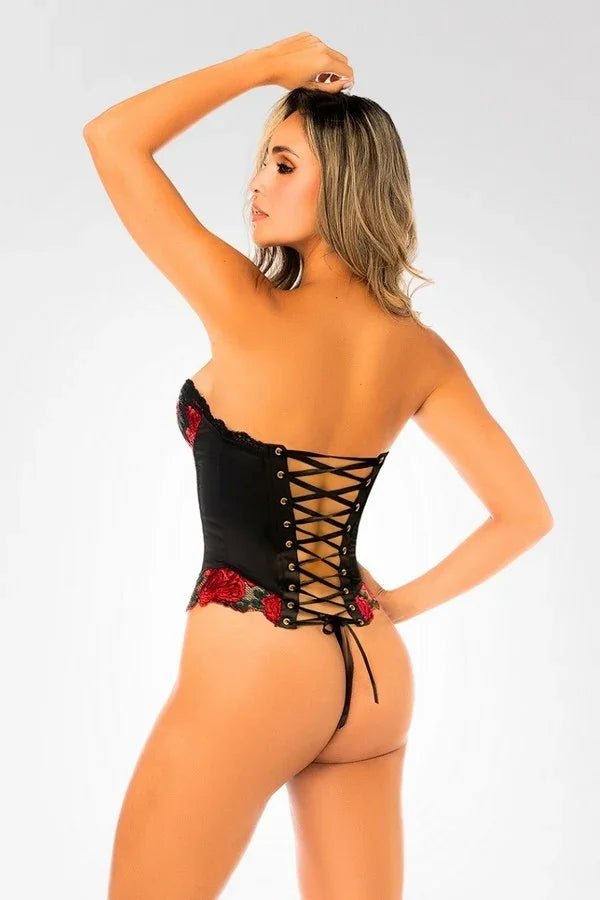
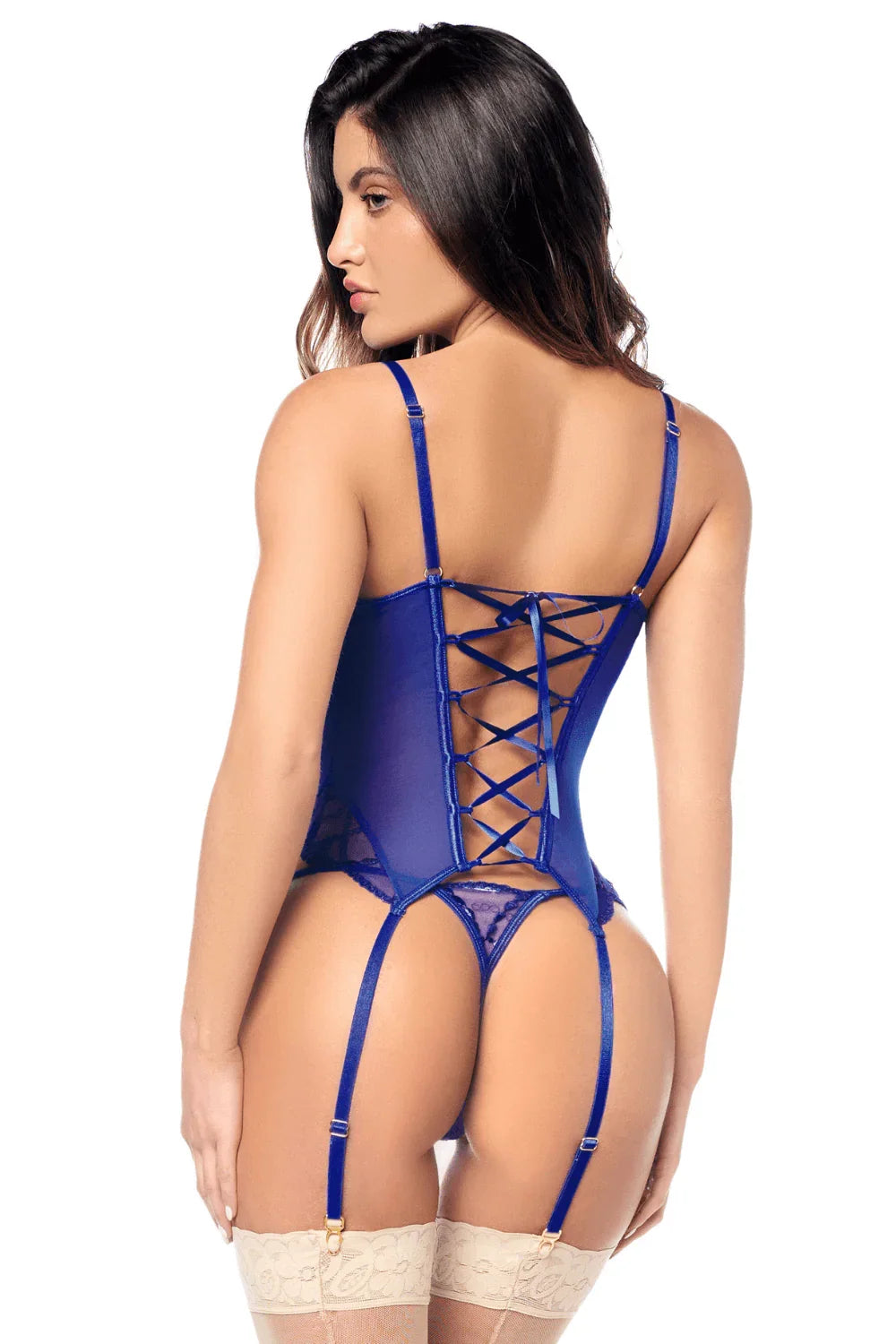
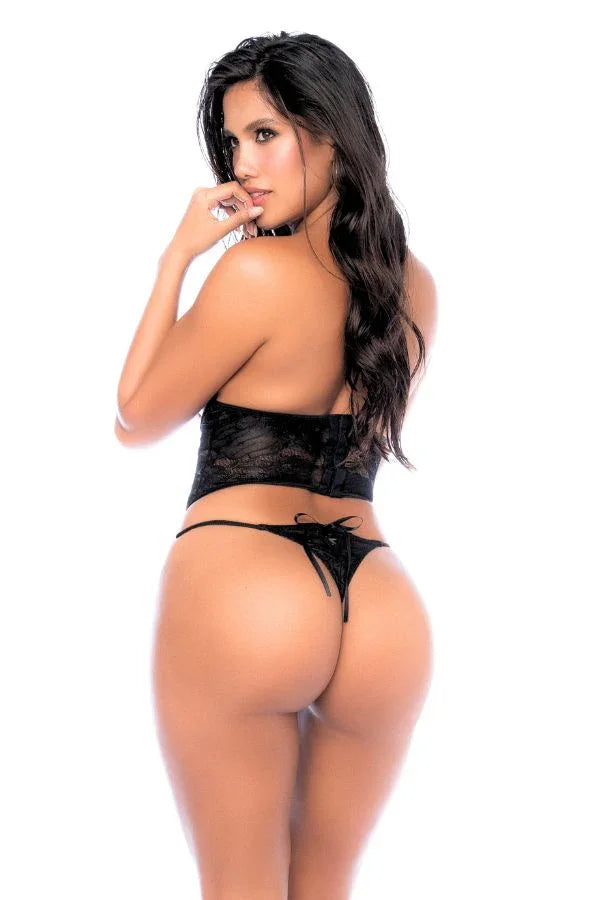
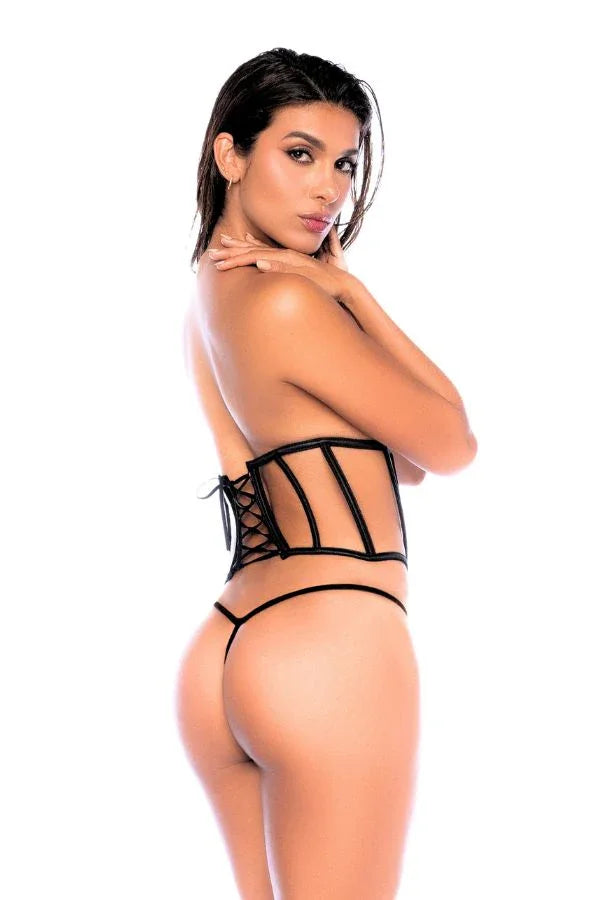
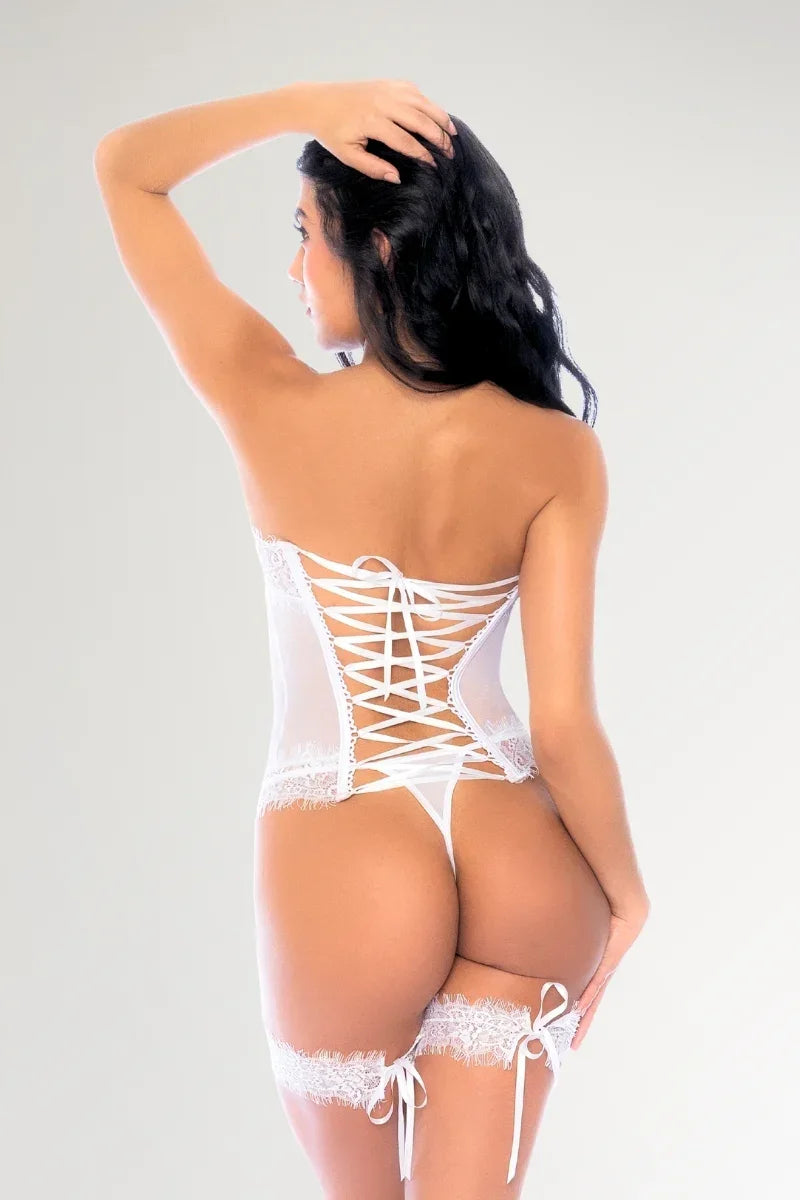
Key tip: styles with back lacing offer 5 to 8 cm of adjustment, making them much more forgiving on fit. If you’re unsure, go for a lace-up style — it will adapt to your shape far more easily than a fixed hook-and-eye fastening.


 Lingerie
 Basques & corsets
 Bodysuits
 Lingerie sets